
Hardwood Floor Sanding in BaltimoreSanding is where a refinish is won or lost
Stain and finish get the credit, but the sanding underneath decides everything: how flat the floor is, how evenly it takes color, and how long the new surface lasts. Here's what proper sanding involves, and when you don't need it at all.
What sanding a hardwood floor actually involves
Sanding is done in stages, not one pass. Work starts with a coarse grit that cuts through the old finish and levels the wood, then steps through progressively finer grits: each pass erasing the scratch pattern the previous one left behind. Skip a stage and those scratches stay hidden until the stain goes on, when they show up as dark cross-hatching you can never unsee. The slow, patient version of this process is the whole difference between a floor that looks refinished and a floor that looks sanded.
The open field of the room is cut with a drum or belt machine: a heavy walk-behind sander that runs with the grain of the boards. It can’t reach the last few inches at the walls, so that perimeter is done with a hand-guided edger, feathered carefully into the field so no ring or shadow line shows where the two machines met. In Baltimore’s older rowhomes the field is often pre-1940 narrow-strip oak: more board edges per square foot, decades of wear, and sometimes a slight wave from years of radiator heat drying one side of the room. That wood rewards an unhurried operator: old-growth oak sands beautifully, but there is only so much of it left above the tongue, so every pass has to count.
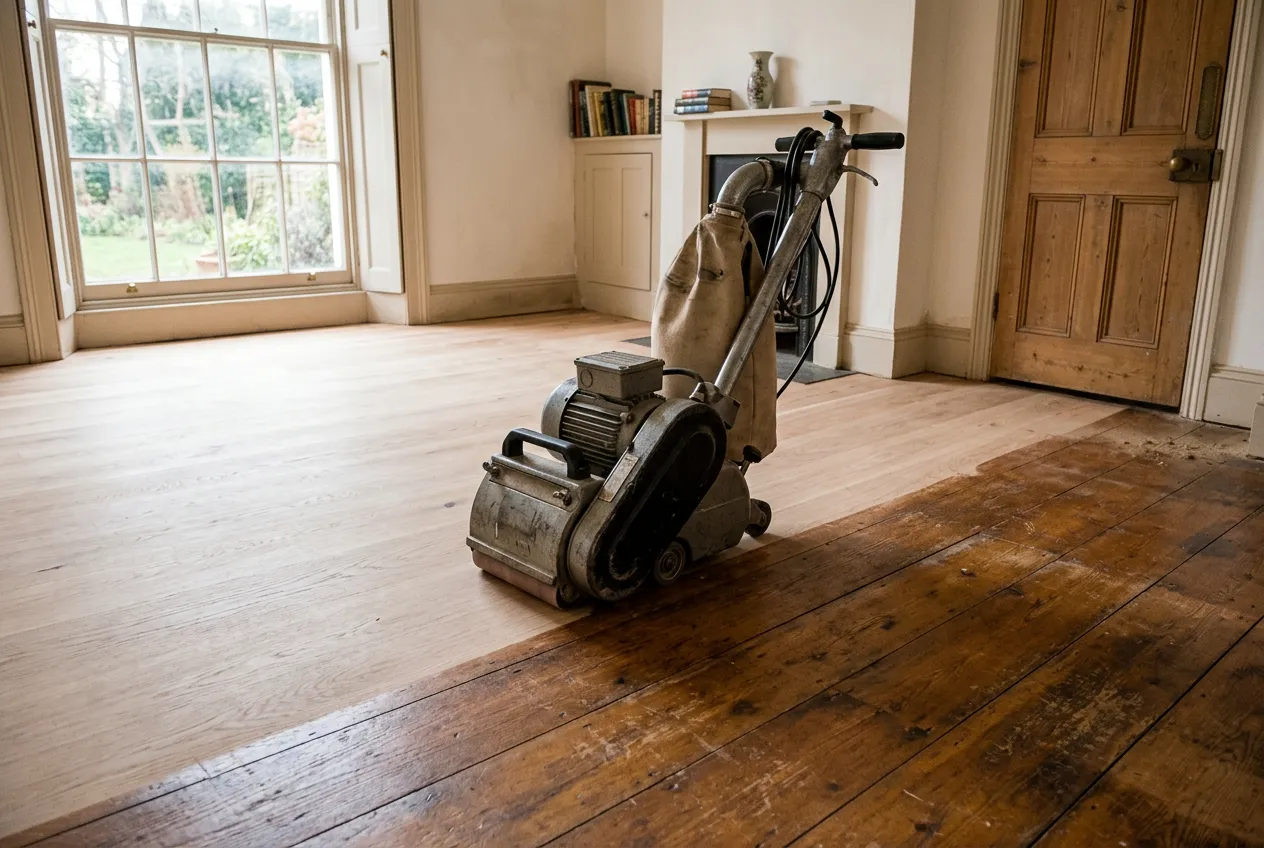
Sanding alone, or a full refinish?
Sanding on its own gets you bare, flat wood: and bare wood can’t stay bare. It has no protection against water, shoes or sunlight, so sanding is almost always the first act of a full refinish: sand, then stain if you want a color change, then two or three coats of finish. The realistic reasons to book sanding as its own line item are rare: a painter or installer taking over the finishing, or bare new boards being blended into an existing floor. For a lived-in home, plan on the whole sequence. It also pays to know what sanding can’t fix: it removes surface wear and shallow scratches, but deep dents and gouges sit below the depth a sander can safely reach, and chasing them thins the floor for nothing. Those get filled or repaired first, then sanded with everything else.
How many sands does a floor have left?
Every sand spends a little of the wood above the tongue, and once that wear layer is gone the floor is done: so a good operator treats it like the finite resource it is. The encouraging news for Baltimore’s older housing stock: solid strip oak of that era carries a generous wear layer, and a floor that has only been sanded a handful of times in a century usually has plenty left. The tell-tales of a floor near the end are exposed nail heads along board edges, tongues showing at gaps, and boards gone springy from thinness: worth checking before any machine is switched on. Prep matters for the same reason: protruding nails get countersunk first, because a nail head meeting a drum doesn’t just tear the abrasive, it gouges the board it sits in.
Screen-and-recoat: the option worth asking about first
If your finish is dull, lightly scratched, or just tired, but still intact, with no bare wood or gray patches, you may not need sanding at all. A screen-and-recoat abrades the existing finish with a fine mesh pad on a buffer, just enough to give it tooth, then lays a fresh coat of finish on top. No machine touches bare wood, none of the floor’s thickness is spent, and the room is back in service far sooner. It’s the honest first question for any floor that’s worn but not damaged, and recoat rates are laid out alongside full refinishing on the cost page. The limit is just as honest: a recoat renews the finish, not the wood. Scratches that have gone through to bare oak, water marks in the wood, or a color you want changed all mean sanding. We walk the whole decision through, including the contamination test that quietly decides it, in screen and recoat vs a full refinish.
The dust question
The old reputation of floor sanding — a house full of fine dust for weeks — comes from machines that threw their dust into the air. Modern sanders run with vacuum extraction at the drum and edger, capturing dust at the point it’s made, with work areas sealed off from the rest of the house. What that does and doesn’t mean for living in your home during the work is covered honestly on the dustless refinishing page.
Not sure if yours needs a full sand?
A few photos in raking light — phone flashlight held low across the floor — usually tell the story. Send them through and you’ll get a straight answer: recoat, refinish, or repair first.
Wondering what's under that old finish?
Describe your floor and you'll get an honest read on sand vs. recoat — before anyone talks numbers.