
Subfloor Repair in BaltimoreA hardwood floor is only as solid as what's underneath it
When a floor feels soft, bouncy or uneven, the hardwood on top is usually fine: the problem is the layer below. Subfloor repair fixes the structure first, so the finished floor above it stays flat and quiet.
What damages a subfloor
Three things, mostly. The first is water: from above, where a leak or spill soaks through the hardwood and sits in the plywood or plank layer underneath, and from below, where a damp basement or crawl space pushes moisture up into the wood year after year. Baltimore rowhomes see plenty of the second kind: unconditioned cellars keep the underside of a first floor damp for decades, and the subfloor slowly softens without a single dramatic leak ever happening.
The second is deflection: the framing flexing more than the subfloor above it can tolerate. Long joist spans, an undersized joist here and there, or a joist that has been notched for plumbing all let the floor move underfoot, and that movement works fasteners loose and fatigues the panels over time.
The third is simply age. Many pre-1940 Baltimore houses have board subfloors, individual planks, often laid diagonally across the joists, rather than modern plywood. A century of drying, foot traffic and old repair work leaves some of those planks split, cupped or barely attached, even where no water was ever involved.
The signs it’s the subfloor, not the hardwood
Soft or spongy spots are the clearest tell: a place where the floor gives noticeably when you step on it, which sound hardwood over sound subfloor simply doesn’t do. Persistent squeaks that come back after surface fixes point the same direction, because the noise is often the subfloor moving against the joists rather than the finish boards moving against each other. And uneven flooring, boards that sit at slightly different heights, or a whole area that dips, usually means the layer they’re nailed to is no longer flat.
Repair or replace?
Subfloor damage is almost always localized, and the fix is localized too. There is rarely any reason to tear out an entire subfloor: the compromised sections get cut out and replaced, and everything still solid stays. The judgment call is drawing the line correctly: rot and moisture damage extend beyond what’s visible, so the cut has to reach sound, dry wood on every side, and the framing below gets checked at the same time. A joist that needs sistering is far cheaper to deal with while the floor is already open than after it’s closed up.
What the work involves
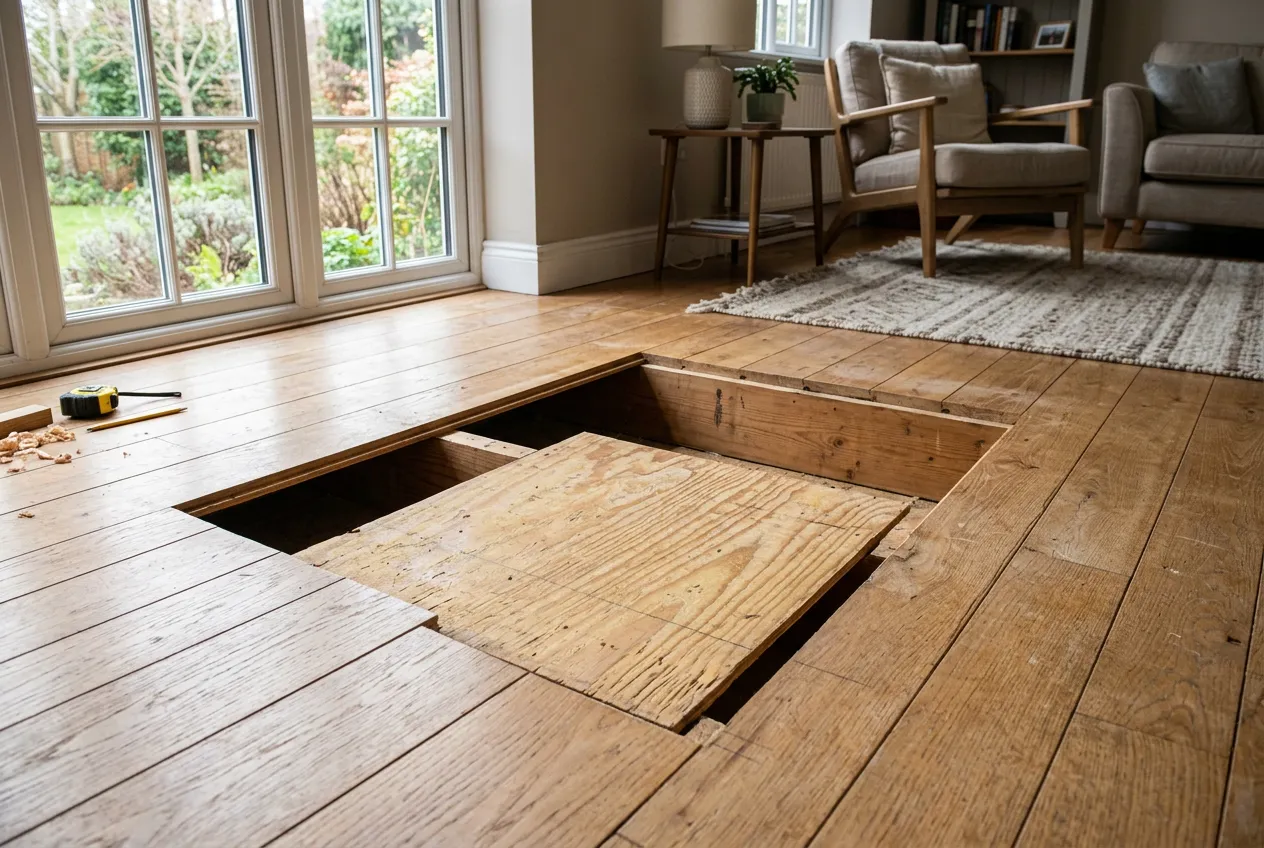
The hardwood above the damaged area comes up first: carefully, because in most cases those boards go back down or get matched with new stock. With the subfloor exposed, the compromised sections are cut back to the nearest joists, the framing is inspected and corrected where it needs to be, and new material goes in, fastened flat and level with the surrounding floor. If moisture caused the damage, the source gets addressed before anything is closed up: otherwise the new wood inherits the old wood’s problem. Then the hardwood is reinstalled or repaired over the top, with replacement boards laced into the existing floor where the originals didn’t survive removal.
How long it takes
A single soft spot — one or two subfloor panels and the hardwood above them — is typically a one-day job. Larger areas, framing corrections, or work that has to wait on drying after a moisture problem stretch that to two or three days, and if the repaired area is being blended into a refinish of the whole room, the finishing schedule runs on top of that. What drives the price, and how the hardwood side of the job is handled, is covered on the repair cost page.
Not sure if it’s the subfloor?
Describe what the floor is doing — where it’s soft, where it moves, what it sounds like — and you’ll get an honest read on whether the problem is above or below, and what fixing it involves.
Floor feels soft underfoot?
Call and describe the spot — you'll know in minutes whether it needs a closer look.