
Screen and Recoat vs a Full Refinish: Which One Does Your Floor Need?
Screen and recoat, buff and coat, maintenance coat — one job under several names. Whether your floor qualifies comes down to one line: is the damage in the finish, or in the wood?
6 min read21 sources cited
On this page
The short answer
- Damage in the finish only — dull, lightly scratched, no bare wood — is screen-and-recoat territory. Damage in the wood, or a color change, means a full sand and refinish.
- Screen and recoat, buff and coat and maintenance coat are one job. “Buffing” is not polishing: a buffer is a machine, and polish is the bottled product that stops a new coat sticking.
- Recoats usually fail on contamination rather than on the wood. NWFA says to clean first and test several areas, and not to use a closet as the test spot.
- A recoat is fewer days of work, but the wait before rugs go back down depends on the finish rather than the job: three days on one product, two weeks on another.
Which one does your floor need?
If the damage is only in the finish — dull, lightly scratched, nothing worn through to bare wood — a screen and recoat is the job. If anything has gone into the wood itself, or you want a different color, you need a full sand and refinish. Everything below is how to tell.
The National Wood Flooring Association (NWFA) puts the easy case in one sentence: “If you only have some minor scratches and dings or a dull finish, it might be possible to simply buff and add a new coat of finish.”[2] Its technical lead states the exclusions just as compactly: “Unless the floor has visible dents, wear patterns, or permanent cupping, or the customer wants to change the color of the floor, a maintenance recoat may suffice.”[3]
Whether a mark sits on the wood or in it is the question; our scratch repair page shows how to tell.
The words mean fewer things than you think
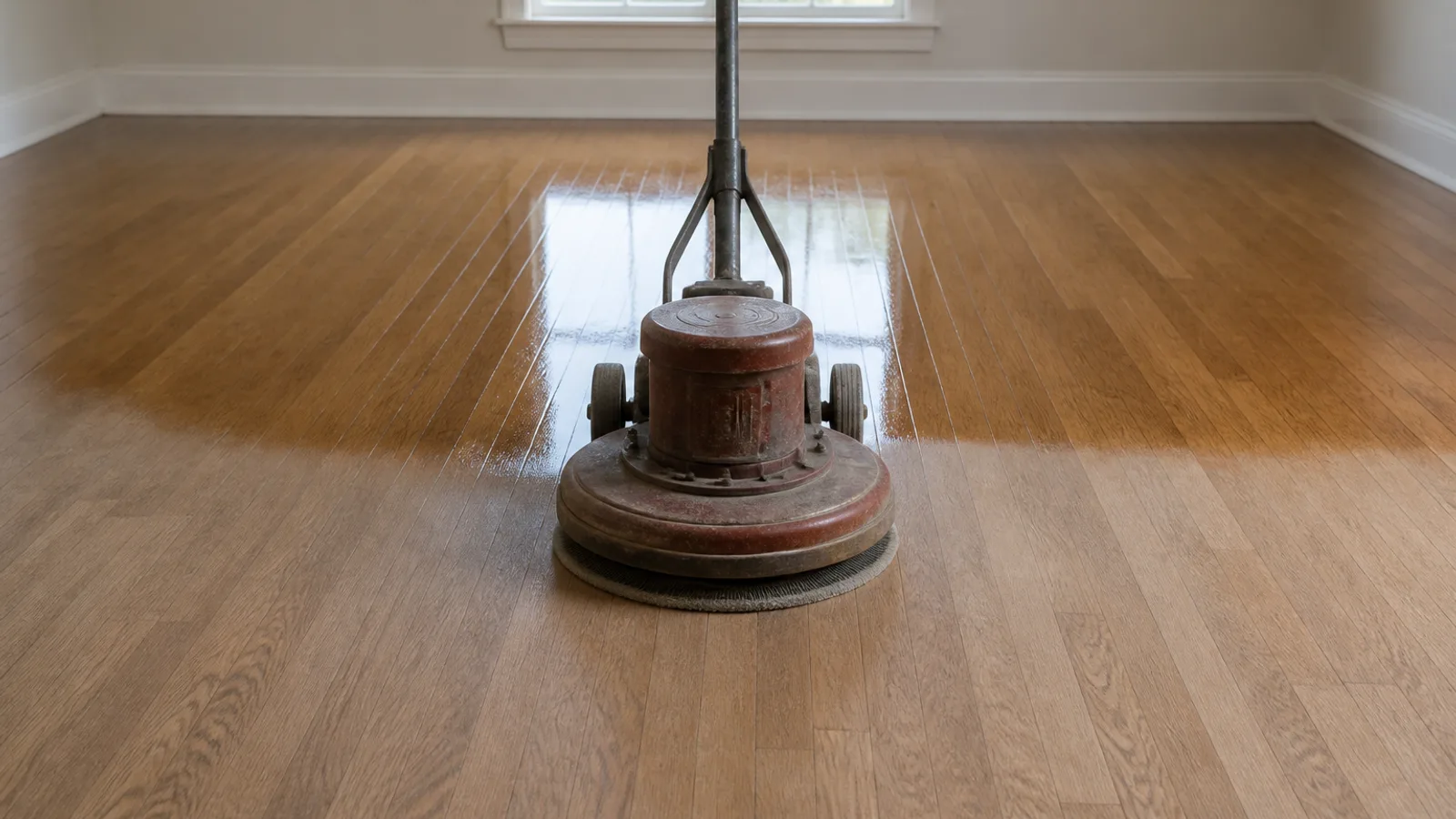
Screen and recoat, buff and coat, abrade and recoat, maintenance coat[1]: one job under several names. The trade press runs most of them in a single parenthesis, describing a floor that needed “an abrade/coat (buff and coat, screen and coat, recoat…)”.[6]
The “screen” is a real object, not a figure of speech: the “‘screen and recoat’ process uses sanding screens to abrade the existing finish on the floor, giving it a ‘tooth’ or ‘scratch’ profile prior to recoating.”[5] That tooth is what the new coat grips.[7]
What rules a recoat out
A recoat renews the finish and does not sand the wood away, so anything wrong with the wood survives it — sometimes looking worse than before.
- Bare wood showing. One manufacturer’s recoat system says it must not be used where the floor “has been maintained with paste wax or oil or is worn to the point where bare wood is exposed.”[21]
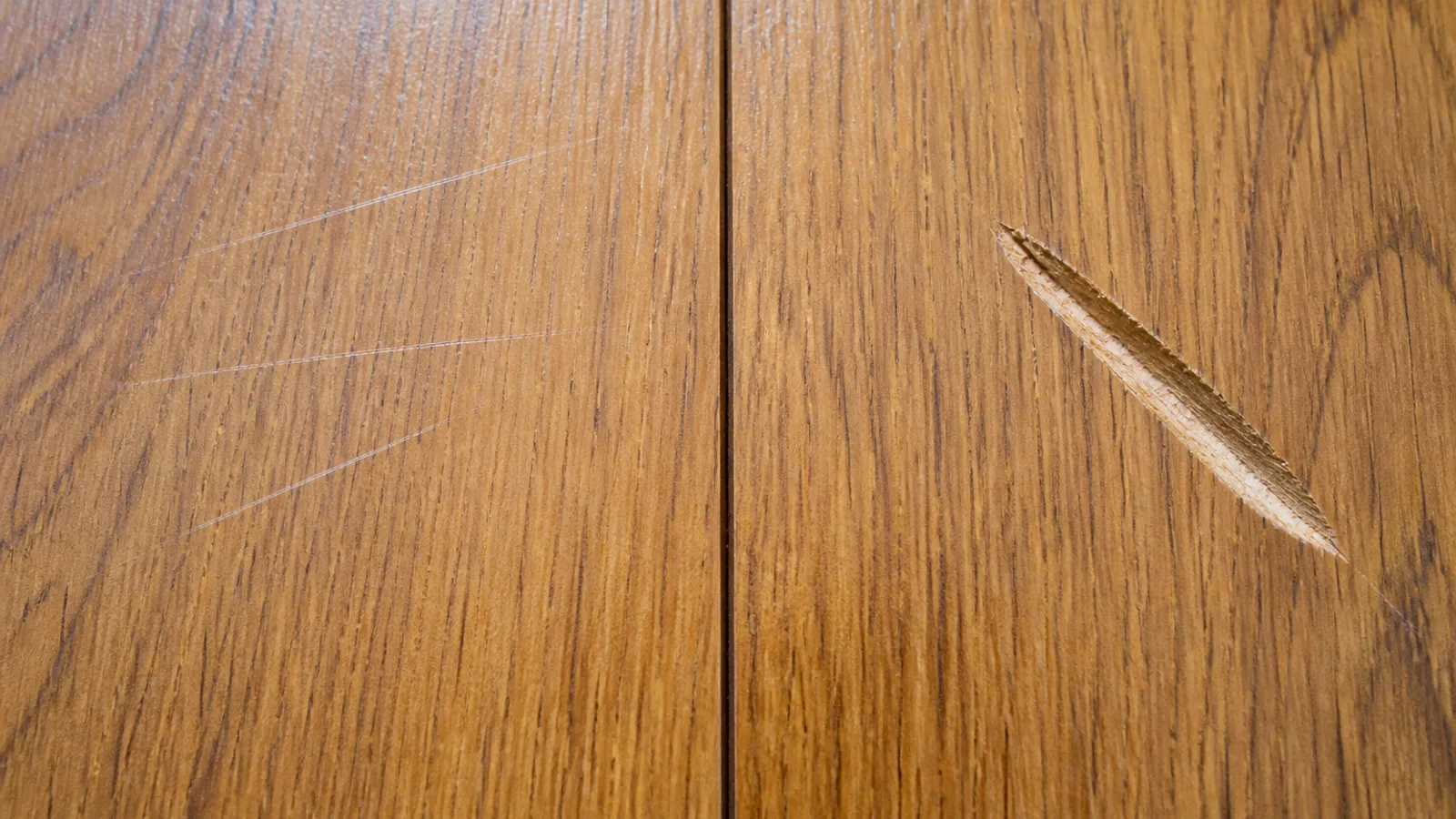
- Dents, gouges and deep scratches. They can be coated over, but NWFA warns they “will still remain in the flooring surface and may even become more apparent after the new coating has been applied.”[4]
- Worn traffic paths. Same source: they “will often accept the new coat of finish differently from the remaining flooring, will remain unsightly…”[4]
- Water damage and discoloration. Recoating “will not remove deep dings, scratches, discoloration due to sun damage, water damage or color change under furniture and rugs!”[7] That is water-damaged floor repair territory.
- A Teflon-infused factory finish. Those “cannot be recoated”. Mark the finish with a permanent marker somewhere hidden: “If it wipes away, Teflon is present.”[4]
The real reason a recoat fails
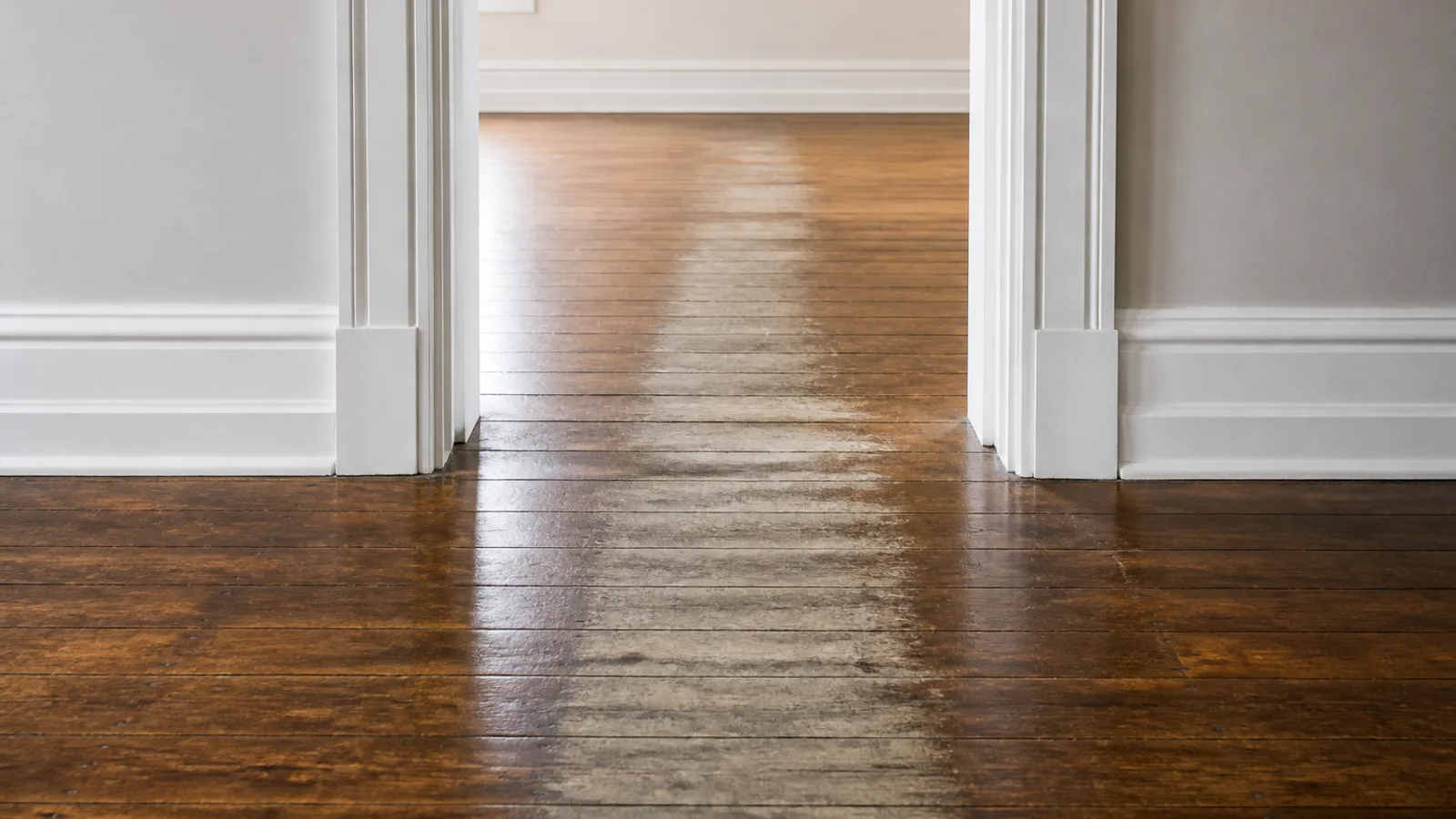
When a recoat peels, the cause is usually contamination rather than the wood — whatever has been cleaned, polished or sprayed onto the floor over the years. NWFA states the chemistry flatly: “Wood floor finishes will not adhere to acrylic polish.”[9]
One trade account describes the result: “when the finish peels in a circular fashion where a table was, or in the shape of a dresser or nightstand… you know there is contamination from furniture polish or floor cleaners and, yes, my fellow floor guys, air fresheners!”[6]
So a recoat done properly is not a same-visit job. NWFA says to clean first, then “test in several areas of the floor to be sure the finish will adhere properly”, and warns against the obvious hiding place: “Closets may not be the best test area…”[4] One manufacturer’s bonding system spells the wait out: coat the test patch, “Let dry overnight”, then “Perform an adhesion test with the edge of a coin… If the finish only dents and does not flake or peel then the adhesion test has passed.”[14]
One long-serving refinisher wants the term retired, because it leaves out the cleaning: “Screens, new or worn, were never designed, sold or promoted as being able to clean a dirty floor.”[8]
Color is the other dividing line
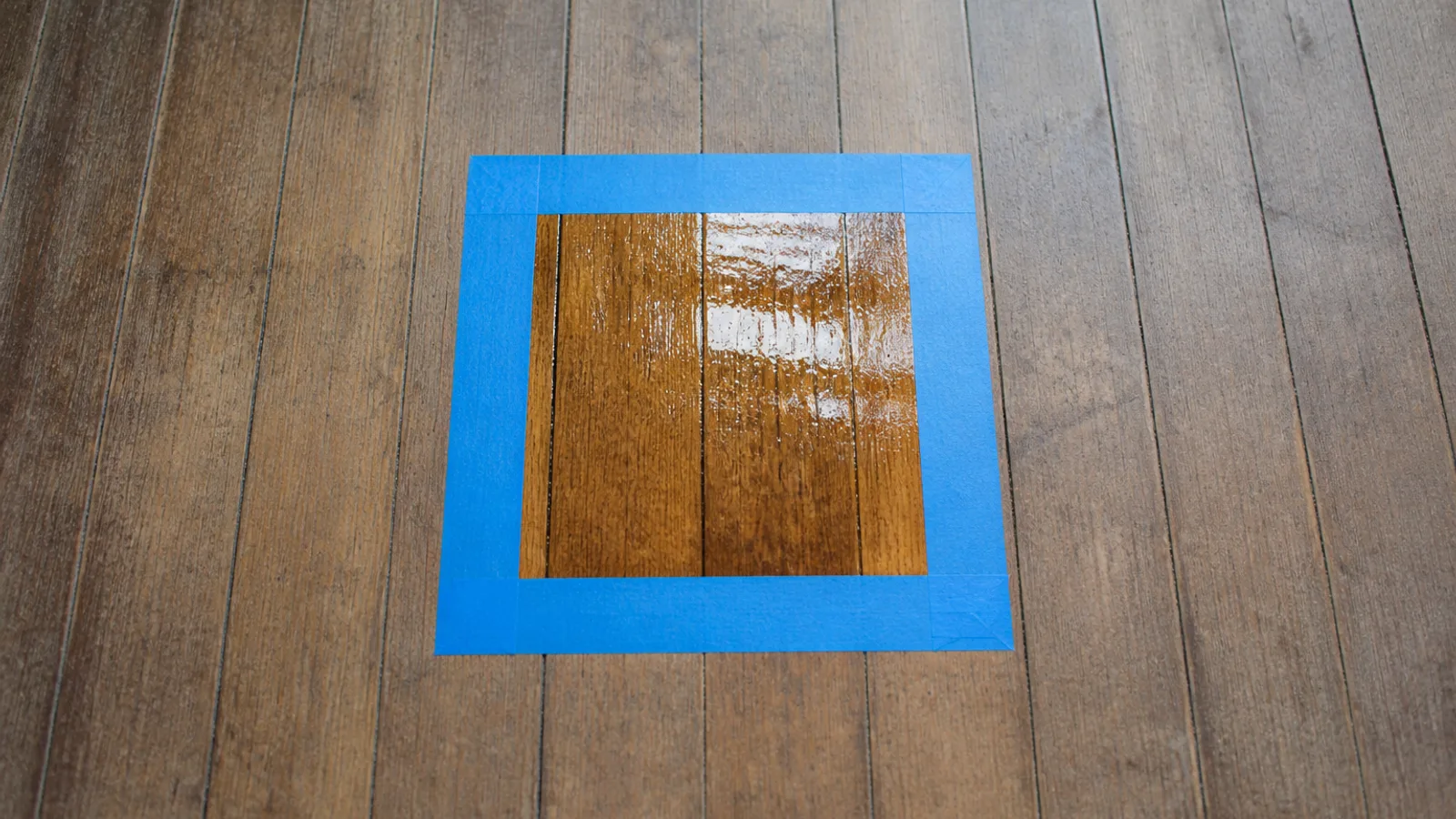
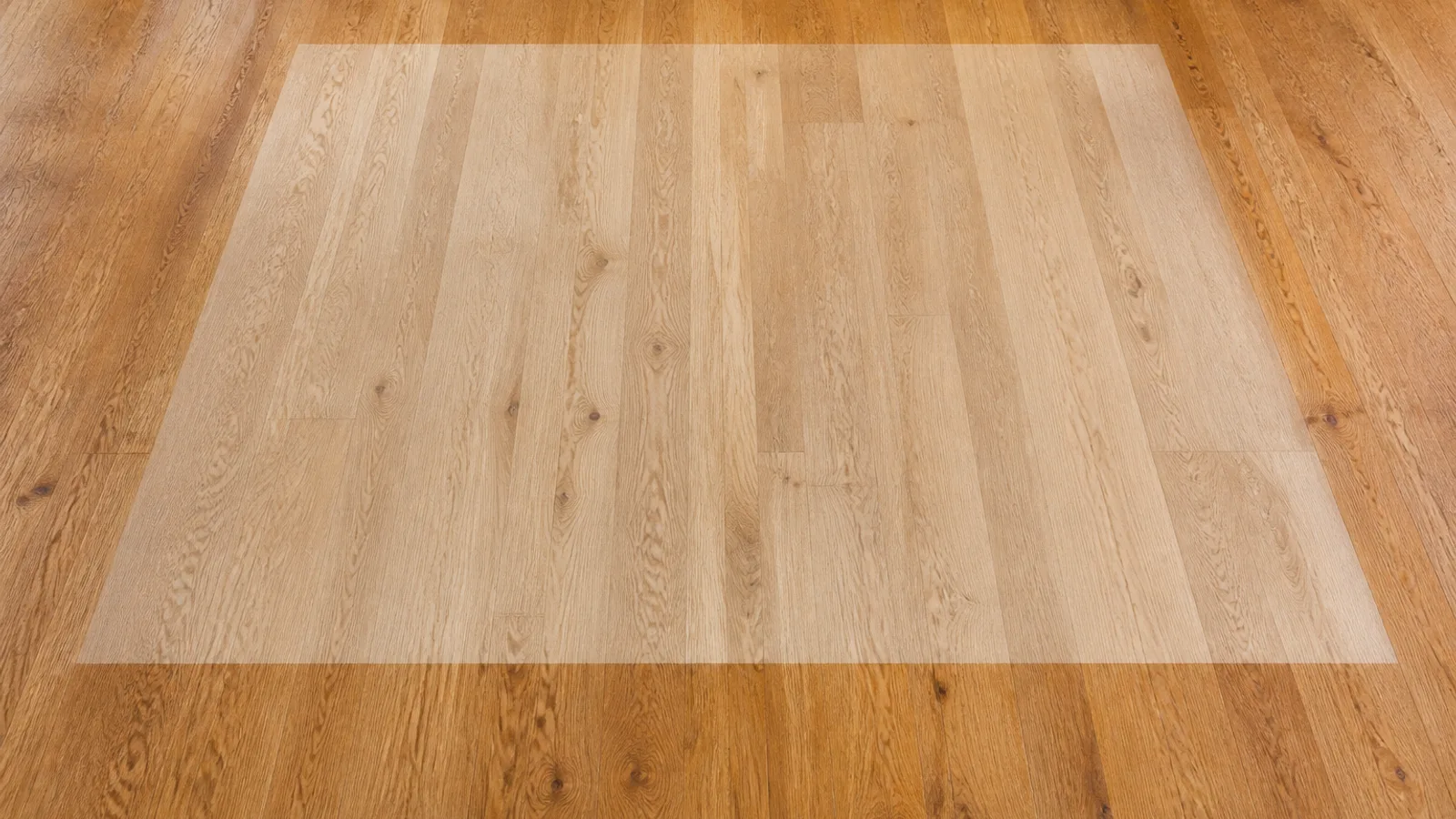
A clear recoat lays a new layer over what is there. It will not lighten a floor, darken it, or even out the paler rectangle where a rug sat. NWFA puts color changes firmly on the other side of the line: “Sanding a floor back to raw wood is the perfect opportunity to change the color of the floor.”[1]
There is one real exception: finishes can be tinted. In NWFA’s own magazine, a finish manufacturer’s market specialist opens with “How many times have you been asked to change the color of a floor without taking it back to bare wood?” and notes that “Hardwood flooring professionals have tinted floor coatings for many years.”[10] It is specialist work with warnings attached: “If the scratch pattern is too aggressive or inconsistent, the colorant may highlight the scratches.”[10]
How long before the house is yours again
Every maker sets its own wait, and it runs from the final coat whether the job was a recoat or a refinish. A recoat is fewer days of work — one maker specifies that “If this is a ‘screen and recoat’… only 2 coats are required” against a third on bare wood[16] — but the cure clock afterwards runs at the product’s own speed.
When can the rugs go back down?
Days after the final coat, as each source states it.
Bona Traffic HD
Approximate full cure; no rugs before it
3days
NWFA, general guidance
Its default where the maker states nothing
7days
Minwax Super Fast-Drying Polyurethane for Floors
Oil-based; no cleaning either
7days
Basic Coatings StreetShoe NXT
Stated as "at least two weeks"
14days
Basic Coatings TyKote recoat system
A recoat, and still the longest wait here
14days
NWFA sends you to the label first: “Check with the finish manufacturer for when rugs can be placed on the newly finished floor.” Its own default, “in general”, is “a minimum of seven days after the final coat of finish has been applied.”[18] Dust is a separate question, answered on our dustless refinishing page.
What it costs, and three questions to ask
We will not price your floor from a blog post. This Old House, updated June 2026, lists recoating at “$1–$2 per sq.ft.” against “$3 to $8 per square foot” to refinish[17] — a ratio, not a quote, and its cost data came from aggregators rather than its own survey. What moves a real number here is on our refinishing cost page.
- Will you test the floor first, and where? NWFA says several areas, and not the closet.[4]
- What have I been cleaning this with? Anything sold on shine or restoring has to be found and removed first.[9]
- How many sands does this floor have left? “Generally speaking, most solid wood floors can be sanded six to eight times during their overall service-life,” says NWFA, which puts one sand job at between a thirty-second and a sixteenth of an inch of wood.[11] A recoat spends none of that. More on our floor sanding page and on engineered floors.
Refinishing or recoating a floor in Baltimore City or Baltimore County? Describe it in the form below: how it looks in the doorways, what it has been cleaned with, and whether you want the color changed. Those three answers usually settle it.
Common questions
What is screen and recoat on hardwood floors?
It is a light abrasion of the existing finish followed by a fresh coat of finish on top, with no sanding down to bare wood. Trade publication Wood Floor Business describes it as a process that “uses sanding screens to abrade the existing finish on the floor, giving it a ‘tooth’ or ‘scratch’ profile prior to recoating” — the scratch profile is what the new coat grips. The same job is sold under several names: buff and coat, abrade and recoat, screen and coat, or simply a maintenance coat. It renews the finish only; no wood is removed.
Can you screen and recoat engineered hardwood floors?
Often yes, and it is frequently the better option on an engineered floor precisely because a recoat does not spend any of the wear layer. Two cautions, from the manufacturers and from the National Wood Flooring Association. First, a factory finish infused with Teflon “cannot be recoated” at all — the test is to mark it with a permanent marker in a hidden spot, and if the mark wipes away, Teflon is present. Second, one recoat system warns that an engineered floor whose wear layer is under an eighth of an inch “may not respond well to water”, which matters because the cleaning stage is wet. Ask for a test patch either way.
Does buffing hardwood floors remove scratches?
It removes marks that sit in the finish, not marks that have cut into the wood. The National Wood Flooring Association is explicit that dents, gouges and scratches “may be recoated, but will still remain in the flooring surface and may even become more apparent after the new coating has been applied”. So a new coat can make damage easier to see rather than hide it. If the mark has gone past the finish into the wood, a recoat will not solve it.
How often to screen and recoat hardwood floors?
We could find no published interval in years from the National Wood Flooring Association, and you should be wary of any figure presented as theirs. NWFA gives a condition instead of a date: “When the floor loses its luster, it’s time for a recoat.” Its maintenance guidance adds that “Individual maintenance schedules will vary depending on use, wear and tear, and lifestyle.” One manufacturer says only that “Every few years floors can be recoated to maintain their protective layer” with its own recoat system. No source we could open puts a limit on how many times a floor may be recoated.
How much does it cost to screen and recoat hardwood floors?
This Old House, in a guide updated in June 2026, lists recoating at “$1–$2 per sq.ft.” against a typical “$3 to $8 per square foot” for professionally refinishing hardwood floors. Treat that as a ratio rather than a quote: the publisher notes its cost data was sourced from cost aggregators rather than its own survey, and none of it is specific to Baltimore. What moves a real number is floor area, the condition of the boards, how much repair is needed first, and whether the floor passes an adhesion test at all: a recoat that fails becomes a full refinish.
Sources
Every factual claim in this article comes from one of these.
- Refinishing Your Floors · National Wood Flooring Association
- Give Your Floors a Refresh · National Wood Flooring Association
- Refinish Your Floor · Hardwood Floors Magazine (NWFA), April 2022
- Recoating a Previously Finished Floor · Hardwood Floors Magazine (NWFA), October 2017
- Taming the Buffer: Understanding How a Wood Floor Buffer Works, Part I · Wood Floor Business
- This Simple Buff & Coat Becomes an Absolute Nightmare! · Wood Floor Business
- Recoating Wood Flooring 101 · Wood Floor Business
- The Missing Link: Are You Skipping a Step in Your Recoats? · Wood Floor Business
- Dealing with Polishes on Wood Floors · Hardwood Floors Magazine (NWFA), June 2022
- Tinting Recoats · Hardwood Floors Magazine (NWFA), June 2021
- How Many Times Can a Wood Floor Be Sanded? · Hardwood Floors Magazine (NWFA), April 2025
- TyKote Dust-Free Refinishing System, application instructions · Basic Coatings
- StreetShoe NXT, technical data sheet · Basic Coatings
- PALL-X BOND, product data sheet · Pallmann
- Bona Traffic HD, technical data sheet · Bona
- Super Fast-Drying Polyurethane for Floors · Minwax
- How Much Does It Cost To Refinish Hardwood Floors? · This Old House, updated June 2026
- Educating Your Customer about Maintenance · Hardwood Floors Magazine (NWFA), December 2017
- Maintenance · National Wood Flooring Association
- Bona Recoat Treatment · Bona (professional)
- TyKote Dust-Free Recoat Bonding Agent, technical data · Basic Coatings