
Before & After Floor Work in BaltimoreDrag the slider. That's the same floor.
Eight kinds of job, from a carpet lift to a burst pipe, with what each one actually involves. Most of these are floors other people had written off.
About these pictures: they illustrate what each type of job involves and the condition we start from — they are examples, not photographs of past customers’ homes. The descriptions of the work are exactly how we do it.
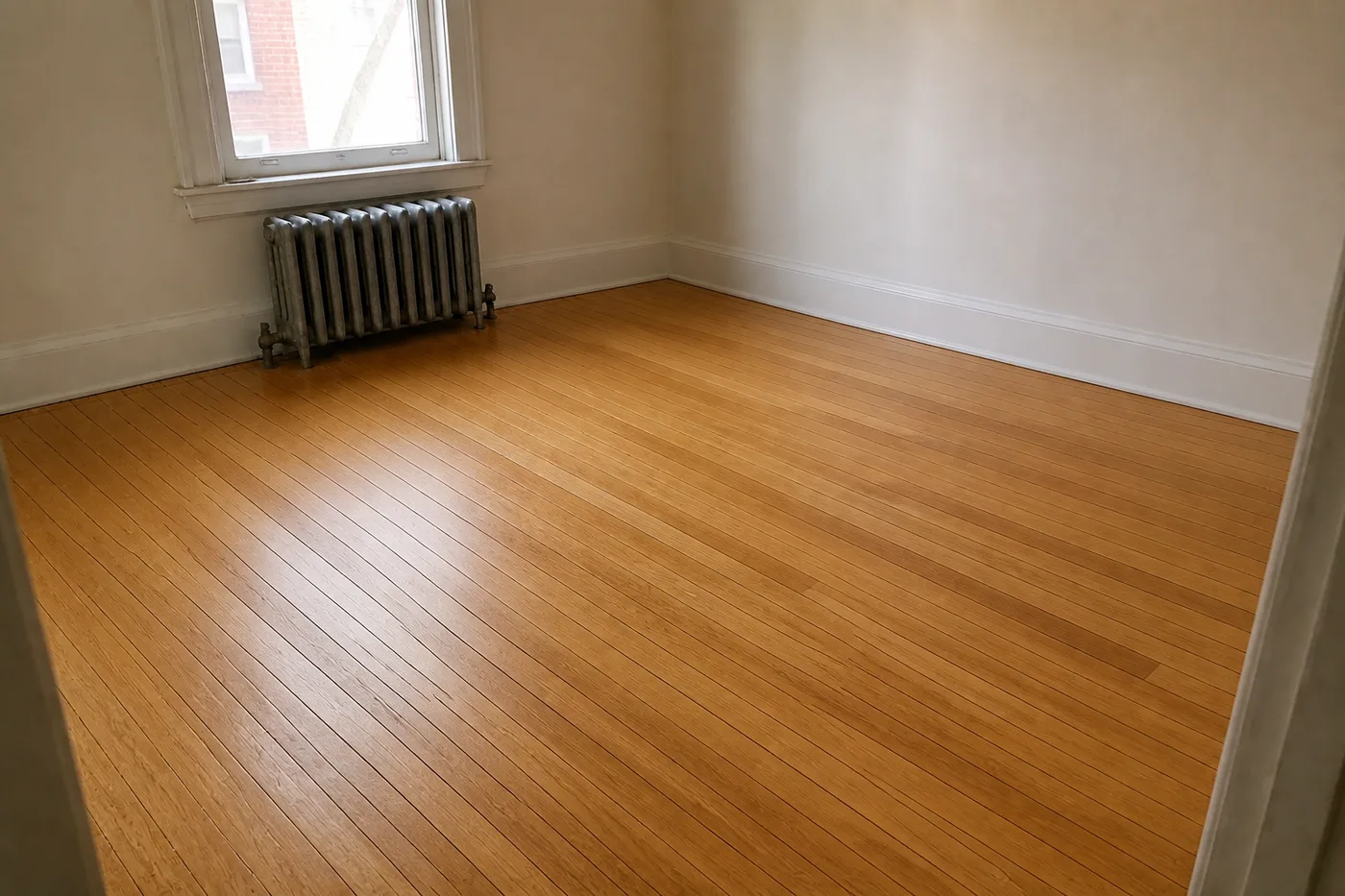
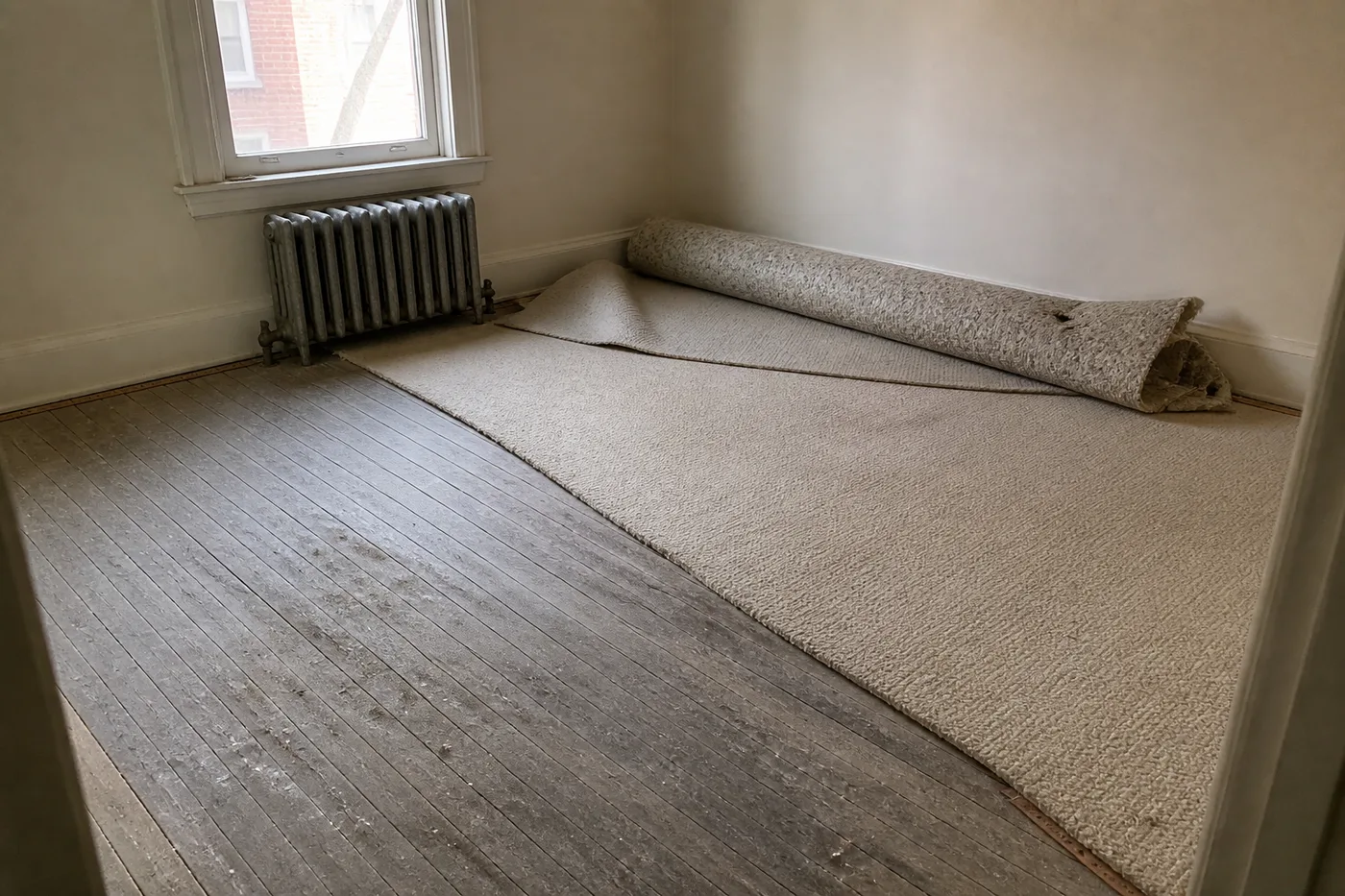
Carpet lifted, original floor refinished
Rowhome bedroom — original floor, never previously refinished
- Wood
- Narrow-strip red oak
- Finish
- Natural, satin
Carpet, underlay and tack strips lifted, then several hundred staples pulled by hand: the slow part, and the part that decides how the floor sands. Three grit passes, edges done by hand, two coats of satin finish. Most Baltimore rowhomes still have their original oak under the carpet.
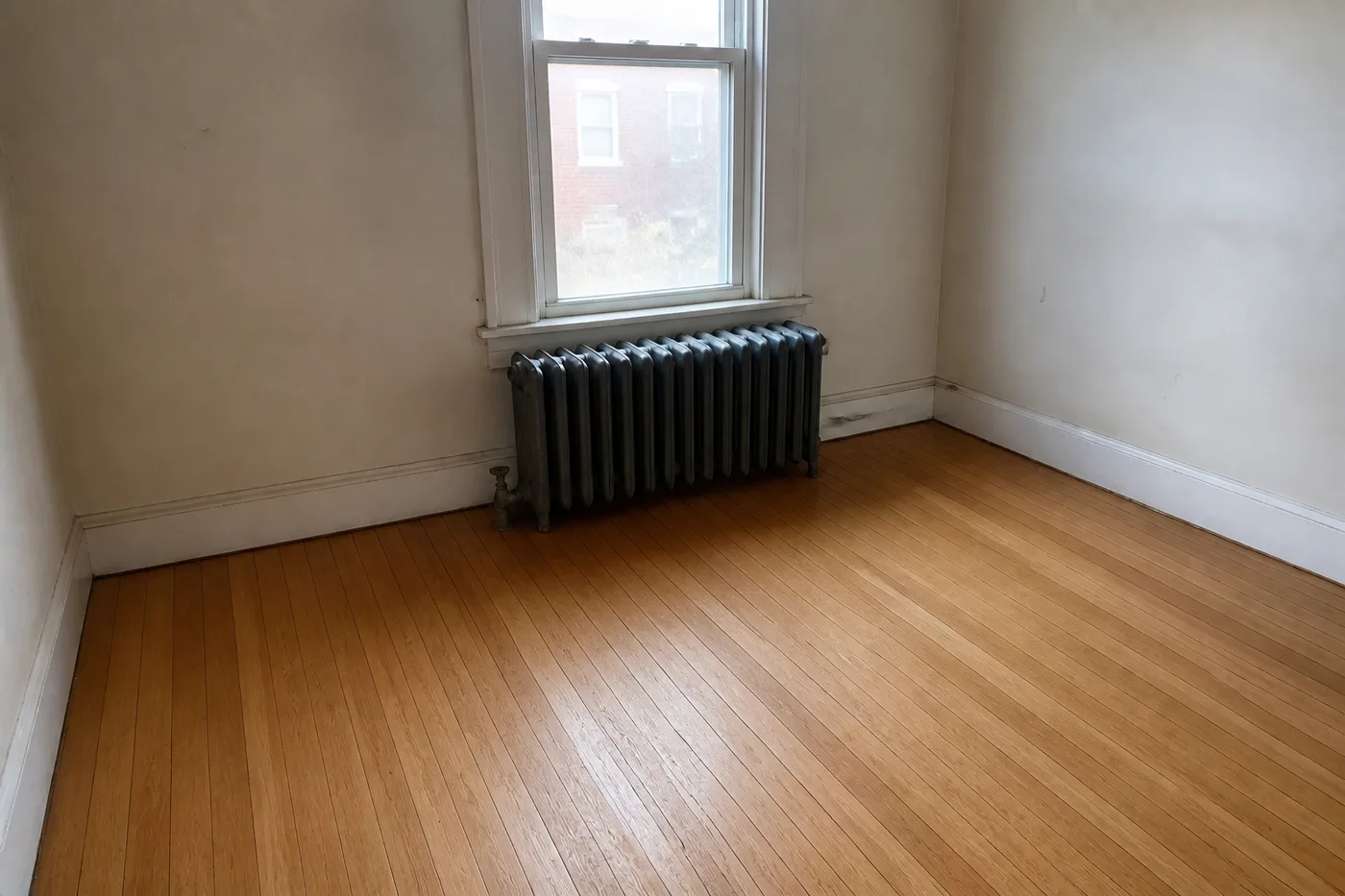
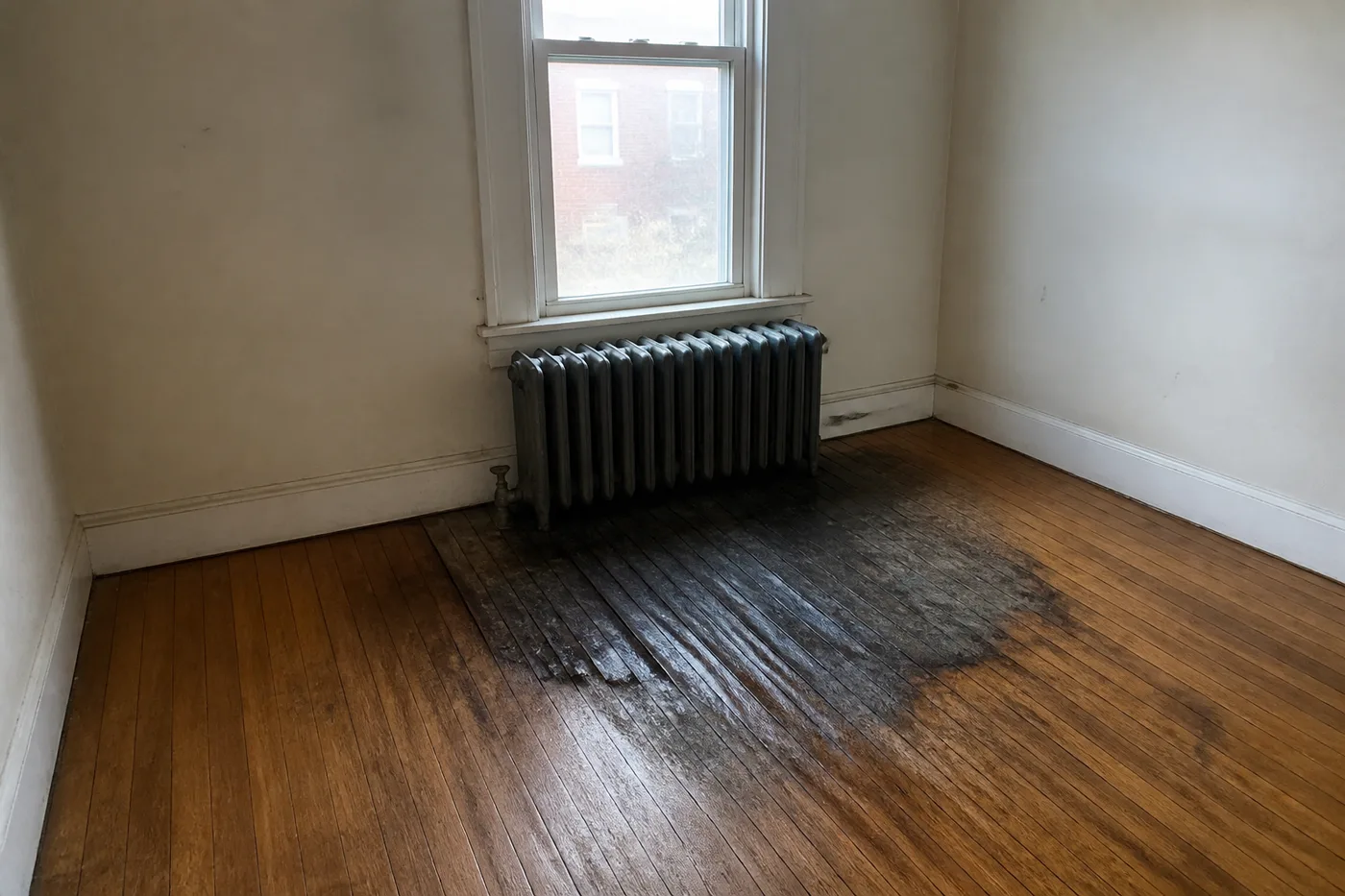
Radiator leak — boards replaced
Rowhome bedroom, floor beneath a cast-iron radiator
- Wood
- Narrow-strip red oak
- Finish
- Natural, satin
A slow radiator leak had blackened the wood and cupped the board edges. Black staining that has reached the wood does not sand out. The affected boards were cut out and replaced, the new lengths staggered so the joints do not line up, then the whole room sanded flat and refinished.
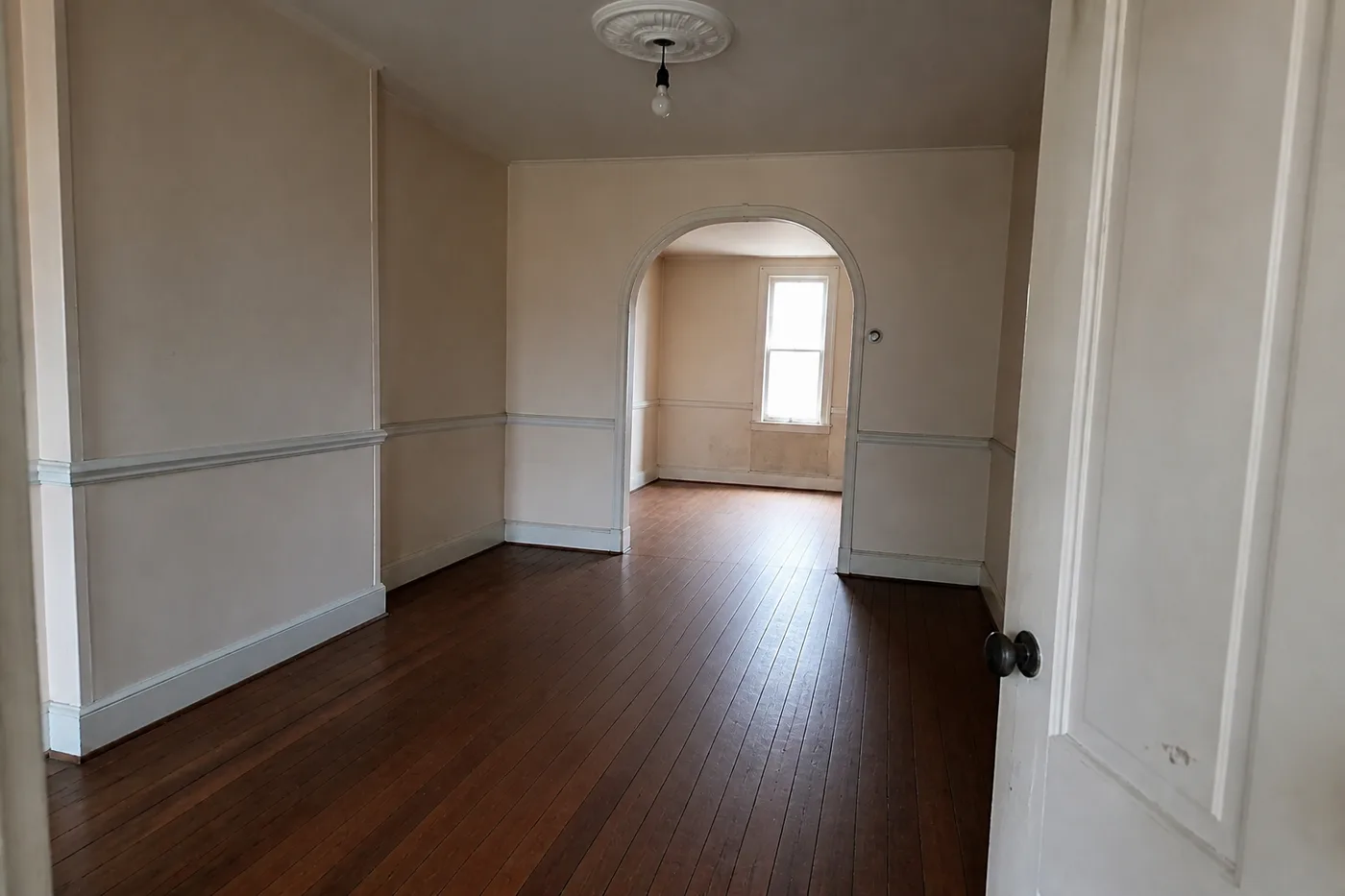
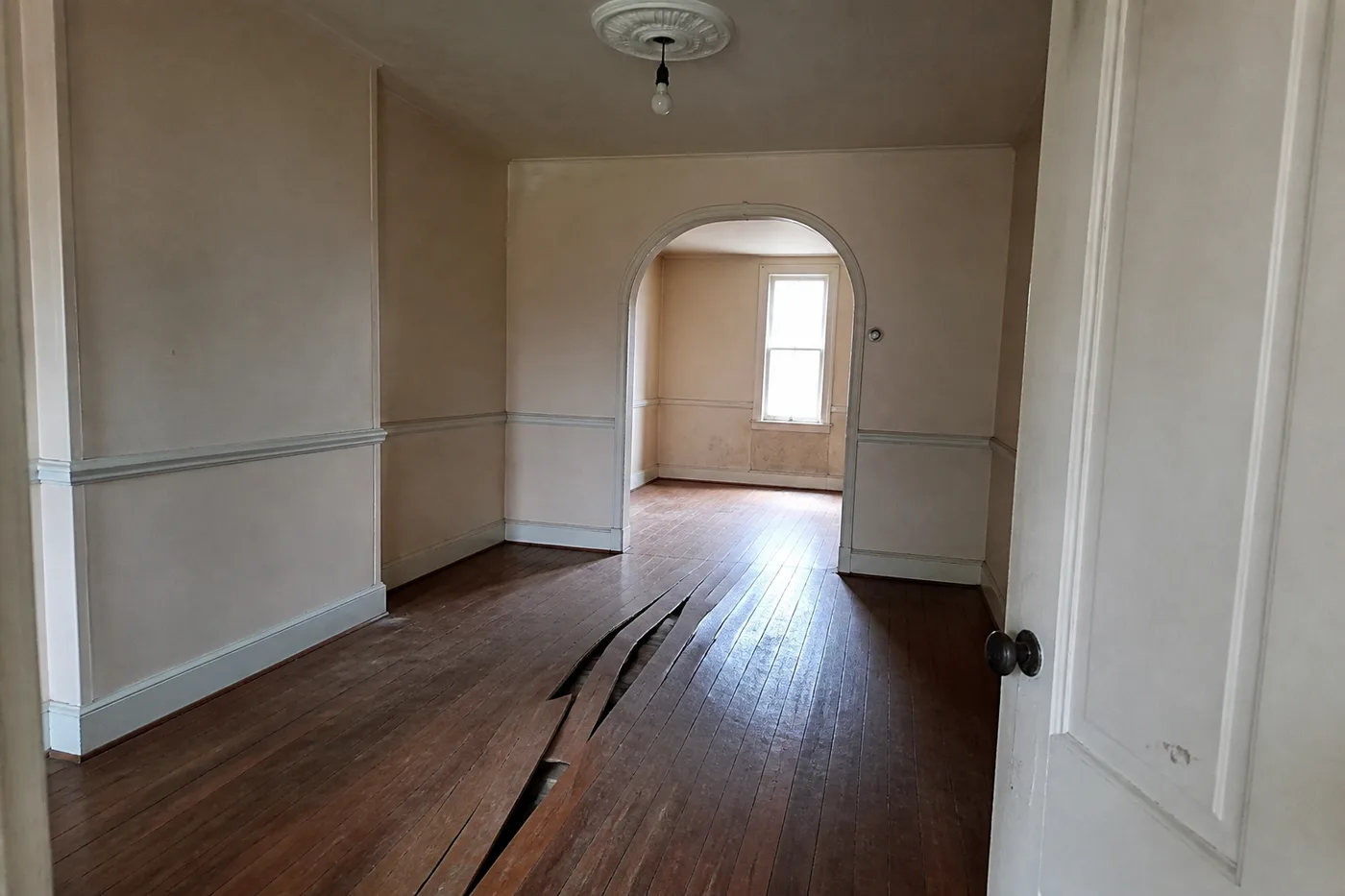
Buckled floor after a burst pipe
Rowhome dining room
- Wood
- Red oak
- Finish
- Special Walnut, satin
Boards had tented clear of the subfloor. The moisture source was found and stopped first and the floor left to dry properly before anything else. Repairing a floor that is still wet leaves it crowned once it finally dries. Then the lifted boards were replaced, the floor sanded flat and finished in Special Walnut.
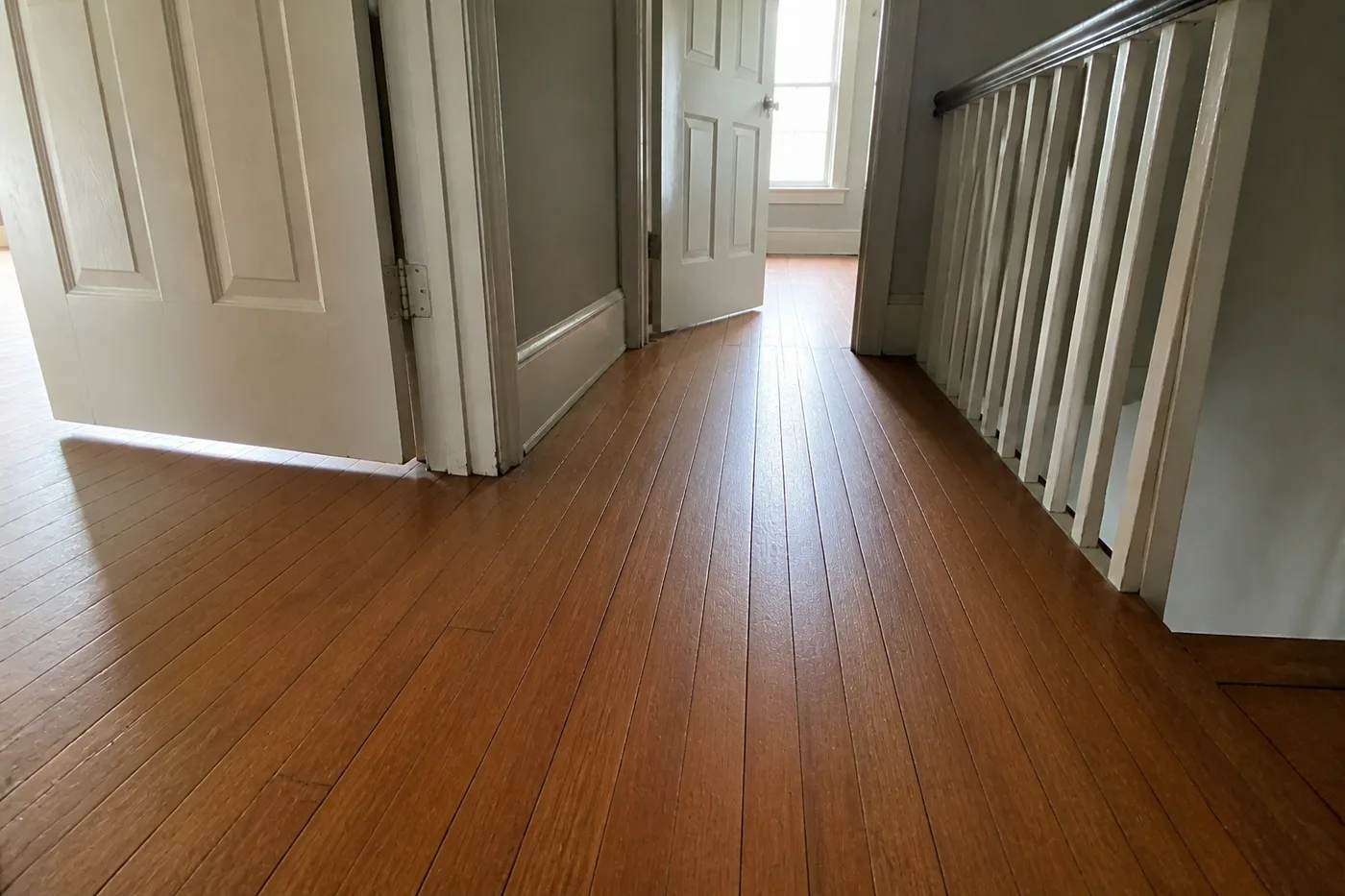
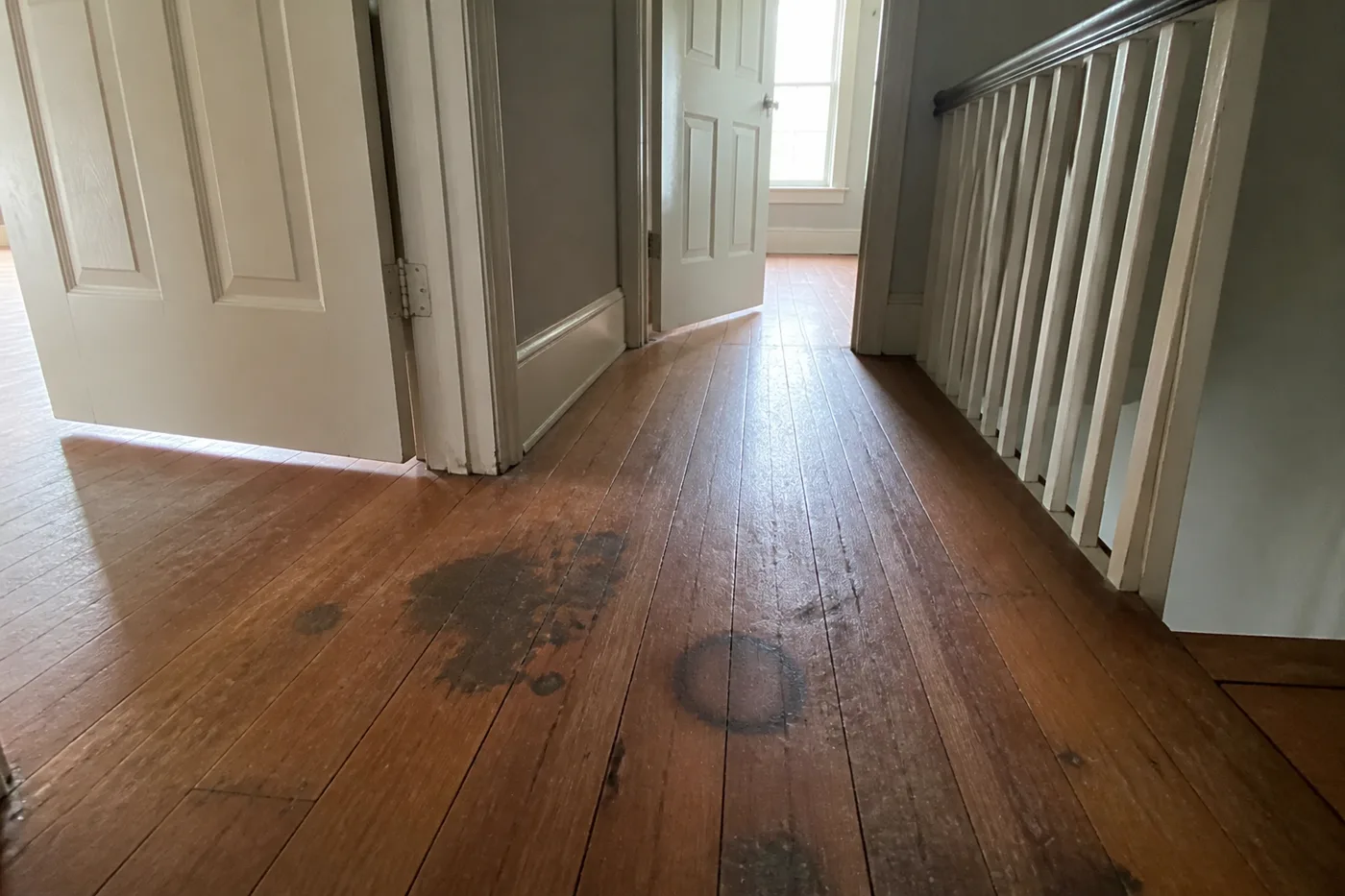
Pet stains — boards cut out and laced in
Upstairs landing outside two bedrooms
- Wood
- Narrow-strip red oak
- Finish
- Early American, satin
The staining had gone through the finish and into the wood, so sanding will not remove it. The affected boards were replaced and laced into the surrounding courses, then the whole landing refinished in Early American so the new wood disappears into the old rather than sitting there as a patch.
Winter gaps filled
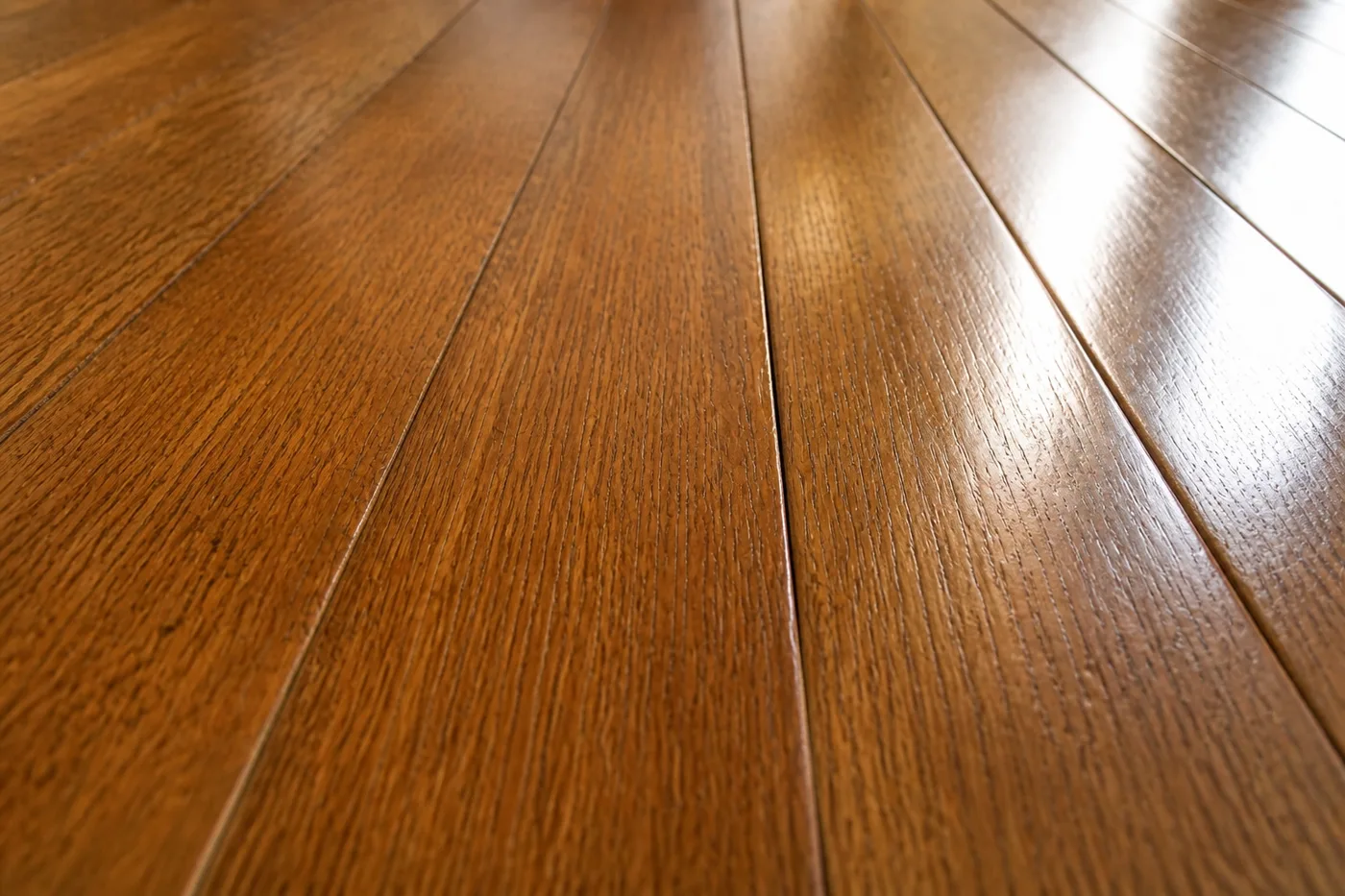
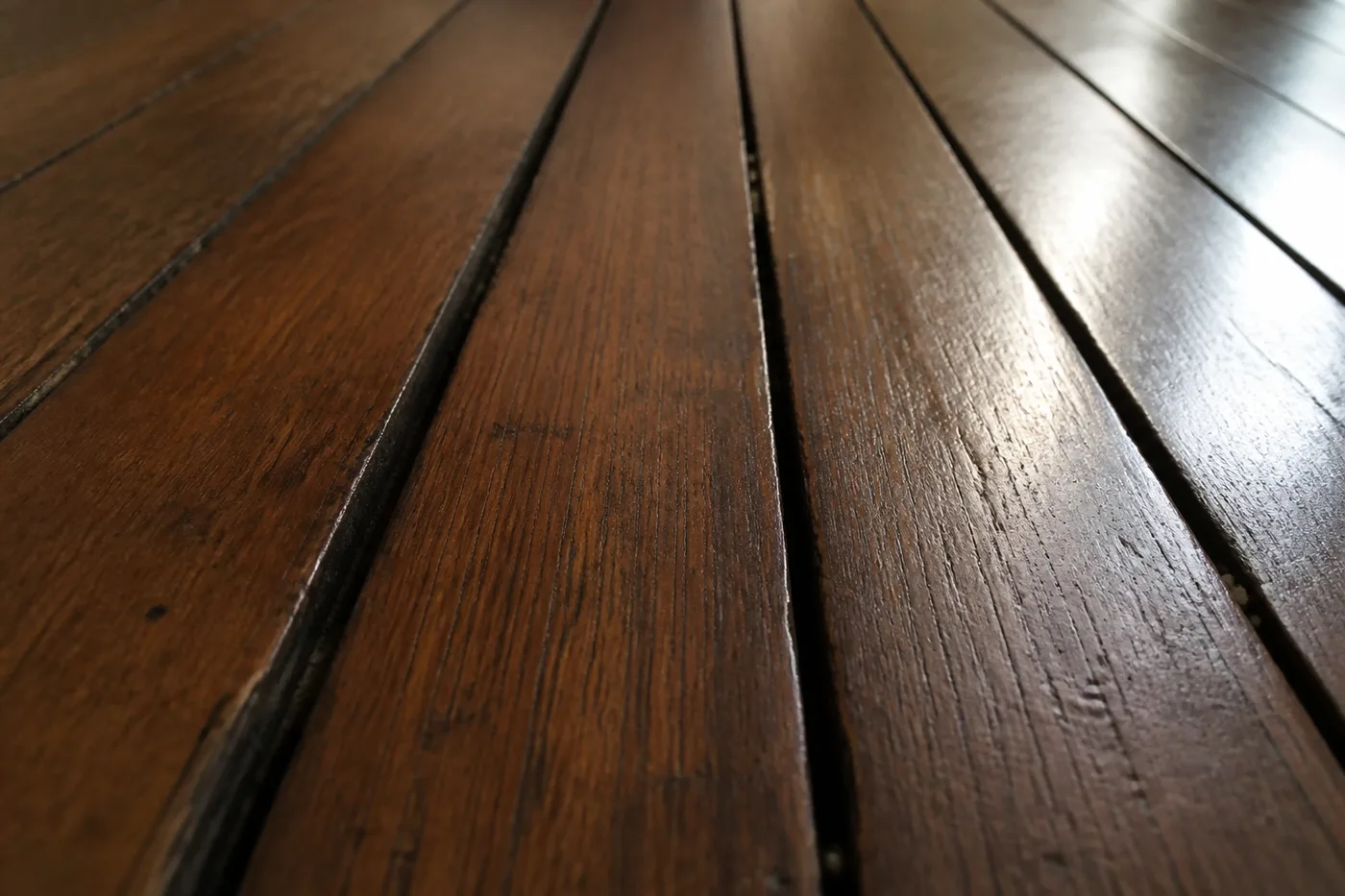
Rowhome upper floor — close detail
- Wood
- Narrow-strip red oak
- Finish
- Natural, satin
Dry winter heat shrinks boards and opens the joints. These were filled after the boards had settled rather than at their widest, then sanded and refinished. Worth knowing: gaps that close again by themselves in summer are seasonal movement and are usually best left alone.
Screen and recoat — no full sand
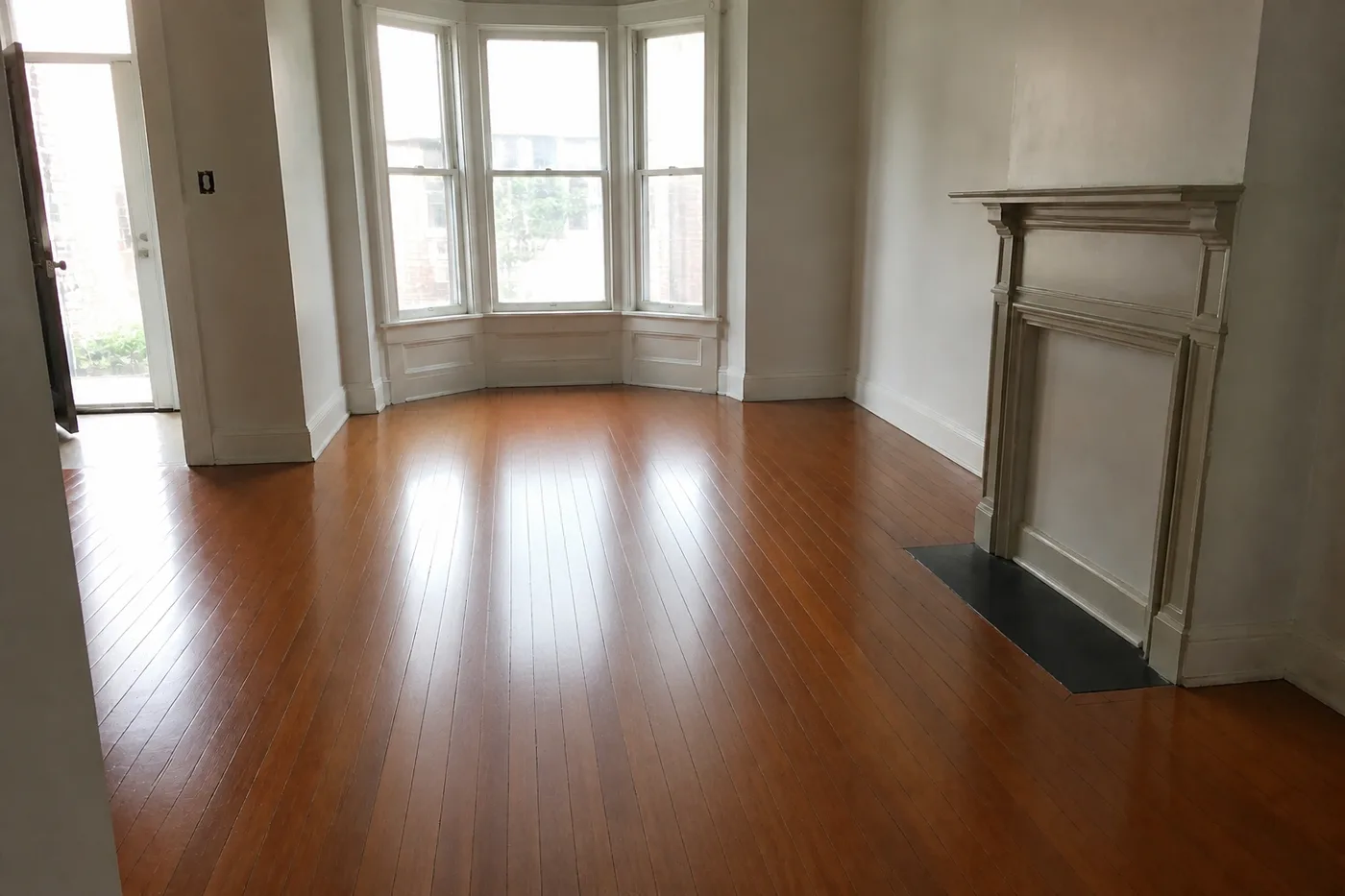
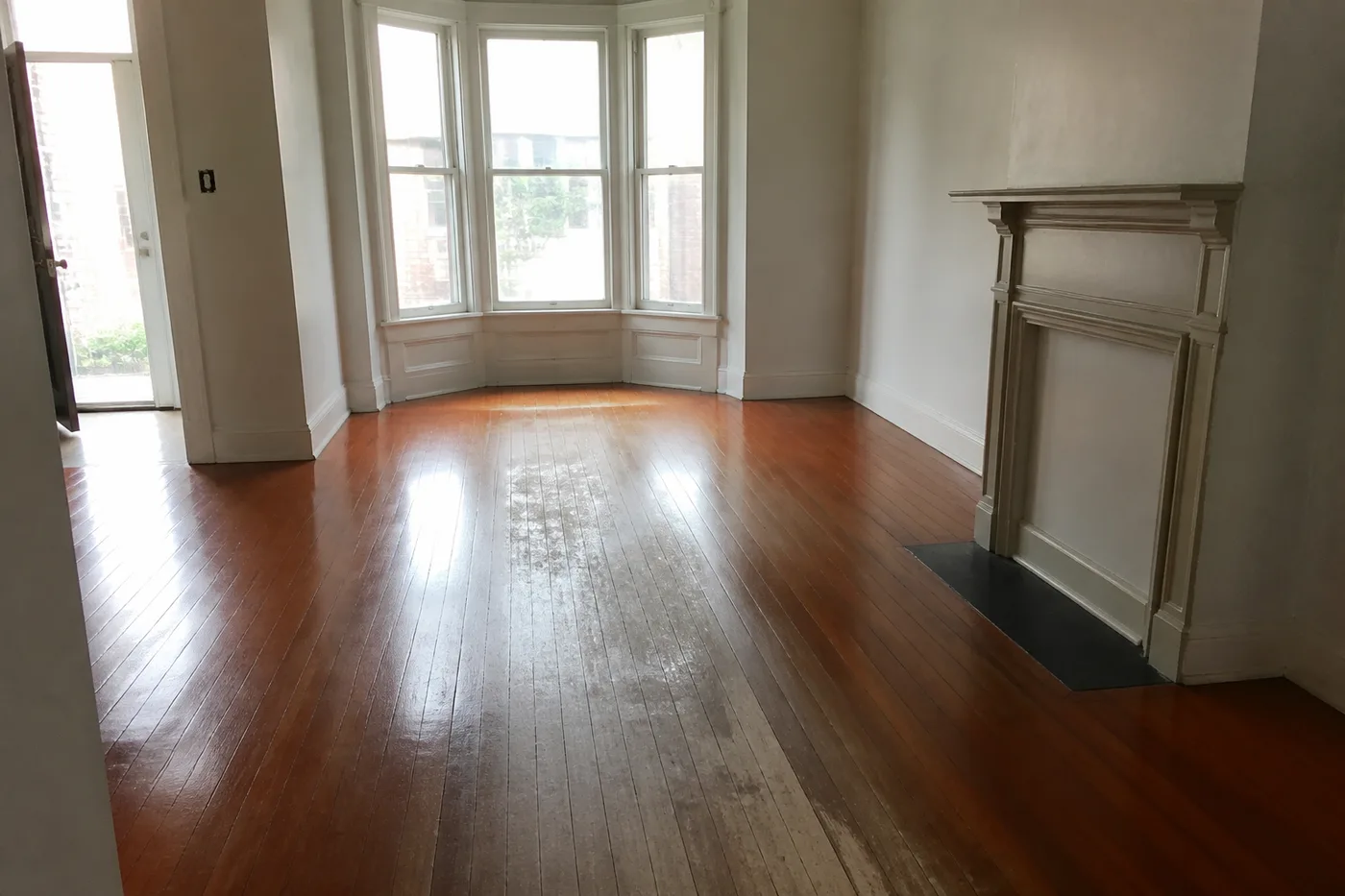
Rowhome front room with bay window
- Wood
- Red oak
- Finish
- Satin
The finish was worn through along the traffic path but the wood underneath was sound, so this did not need a full sand. The floor was screened back and recoated in a day for a fraction of the cost. A floor only has so many full sandings in it, and using one up when a recoat will do is money wasted.
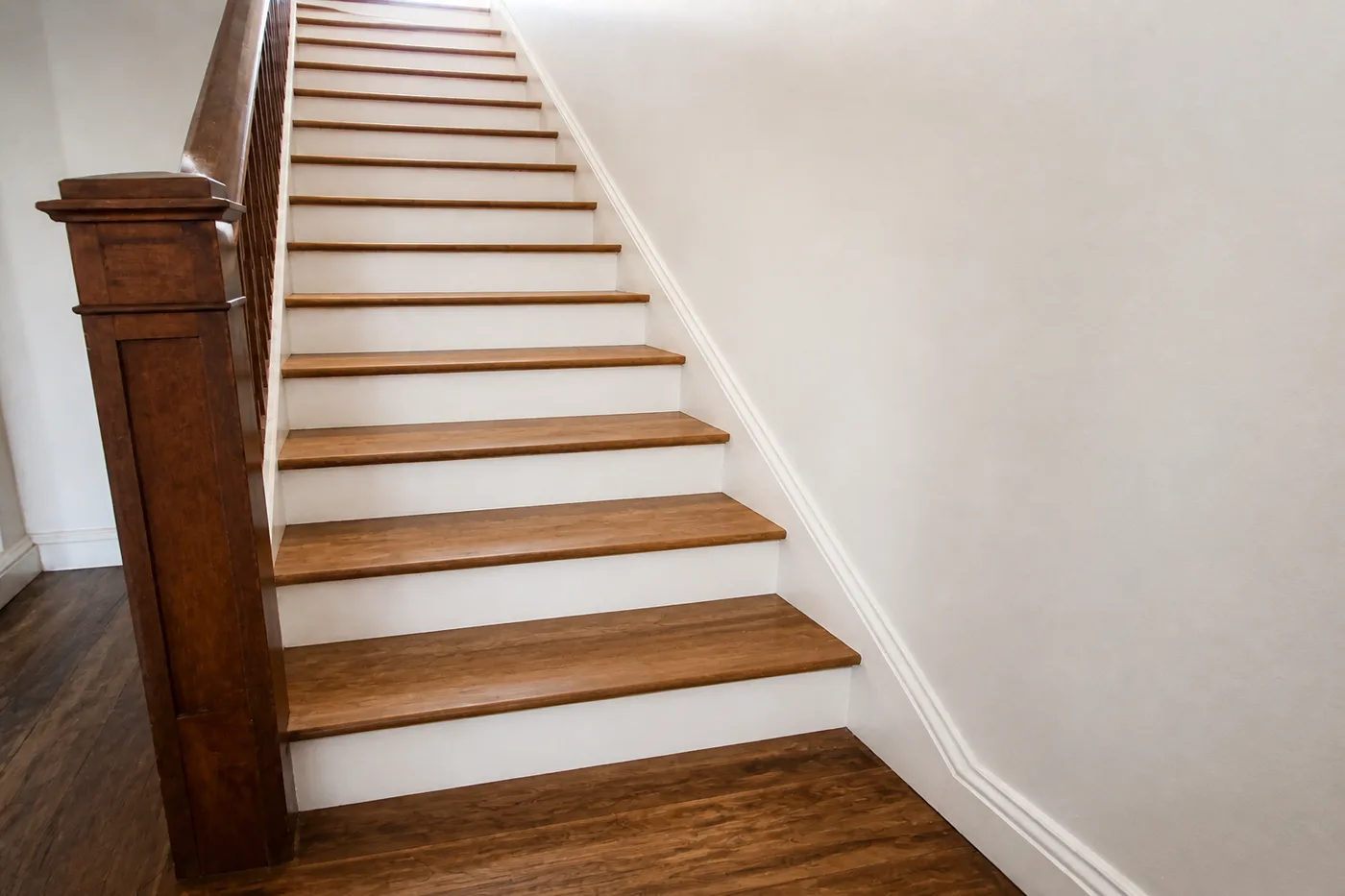
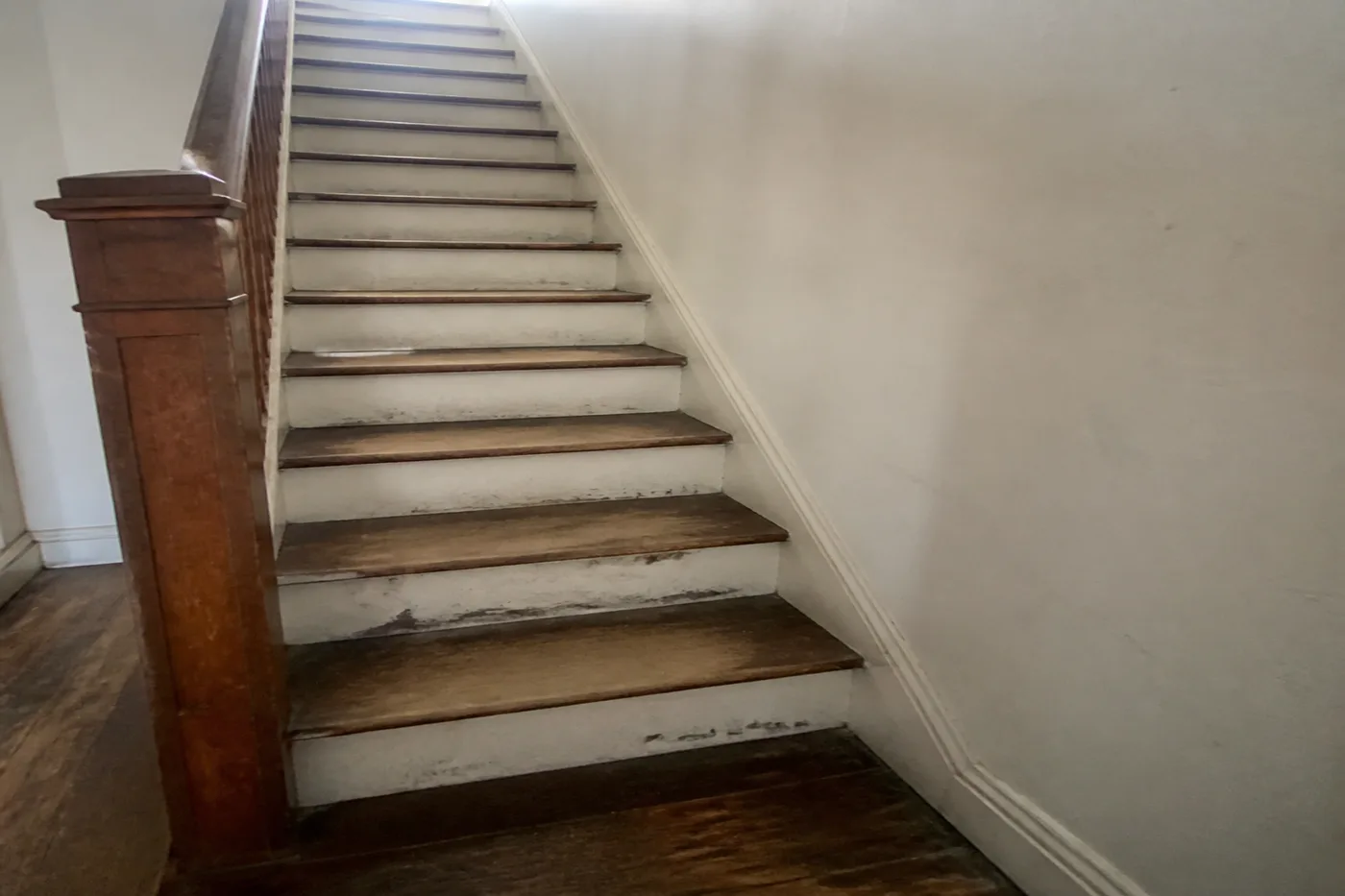
Stair treads refinished
Rowhome main staircase
- Wood
- Red oak treads
- Finish
- Satin treads, painted risers
Treads worn bare through the middle. Stairs are sanded by hand, because a drum sander cannot reach a tread, and the risers were repainted afterwards. This is why stairs are quoted per step rather than by the square foot: no two staircases take the same time.
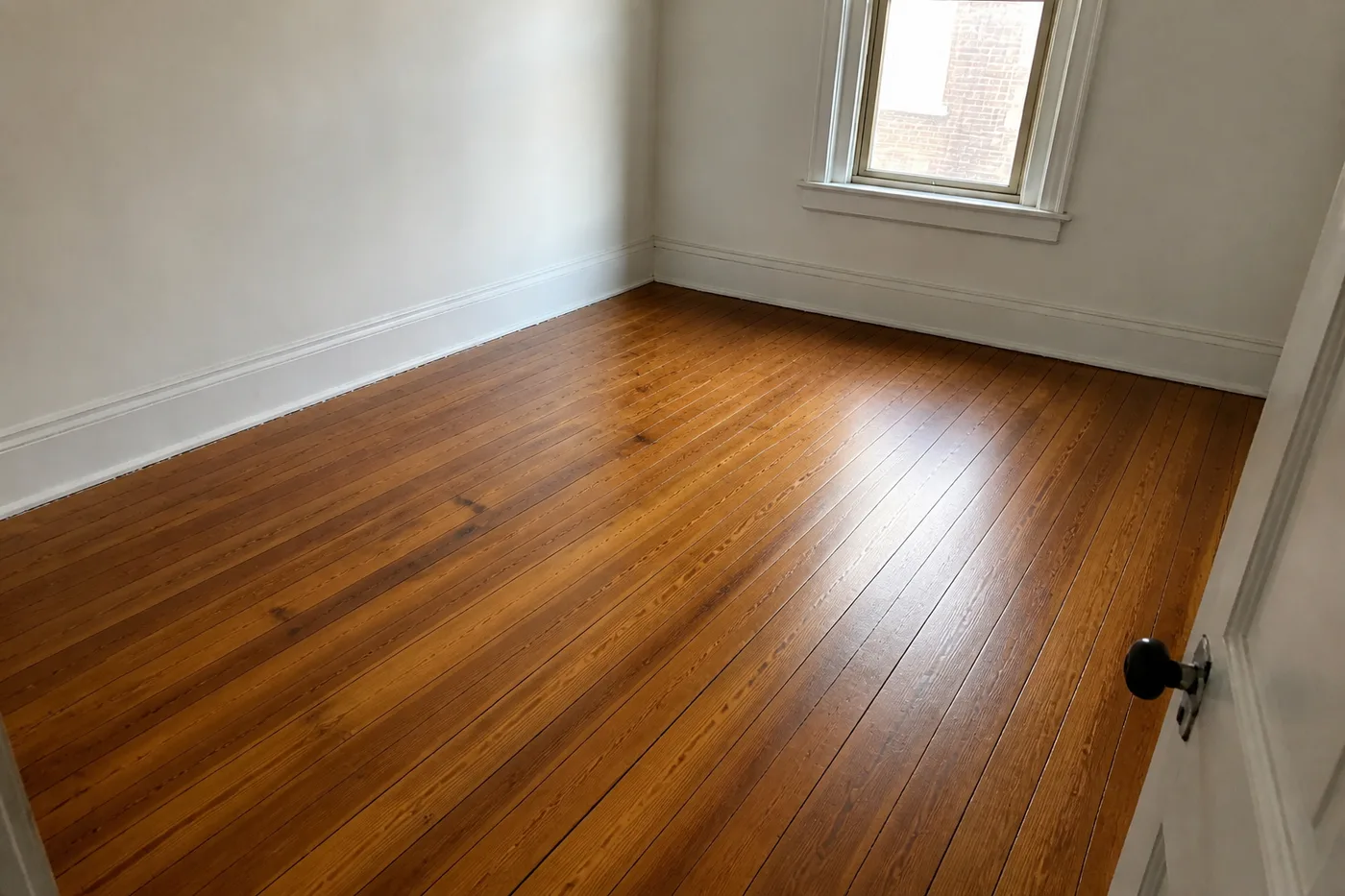
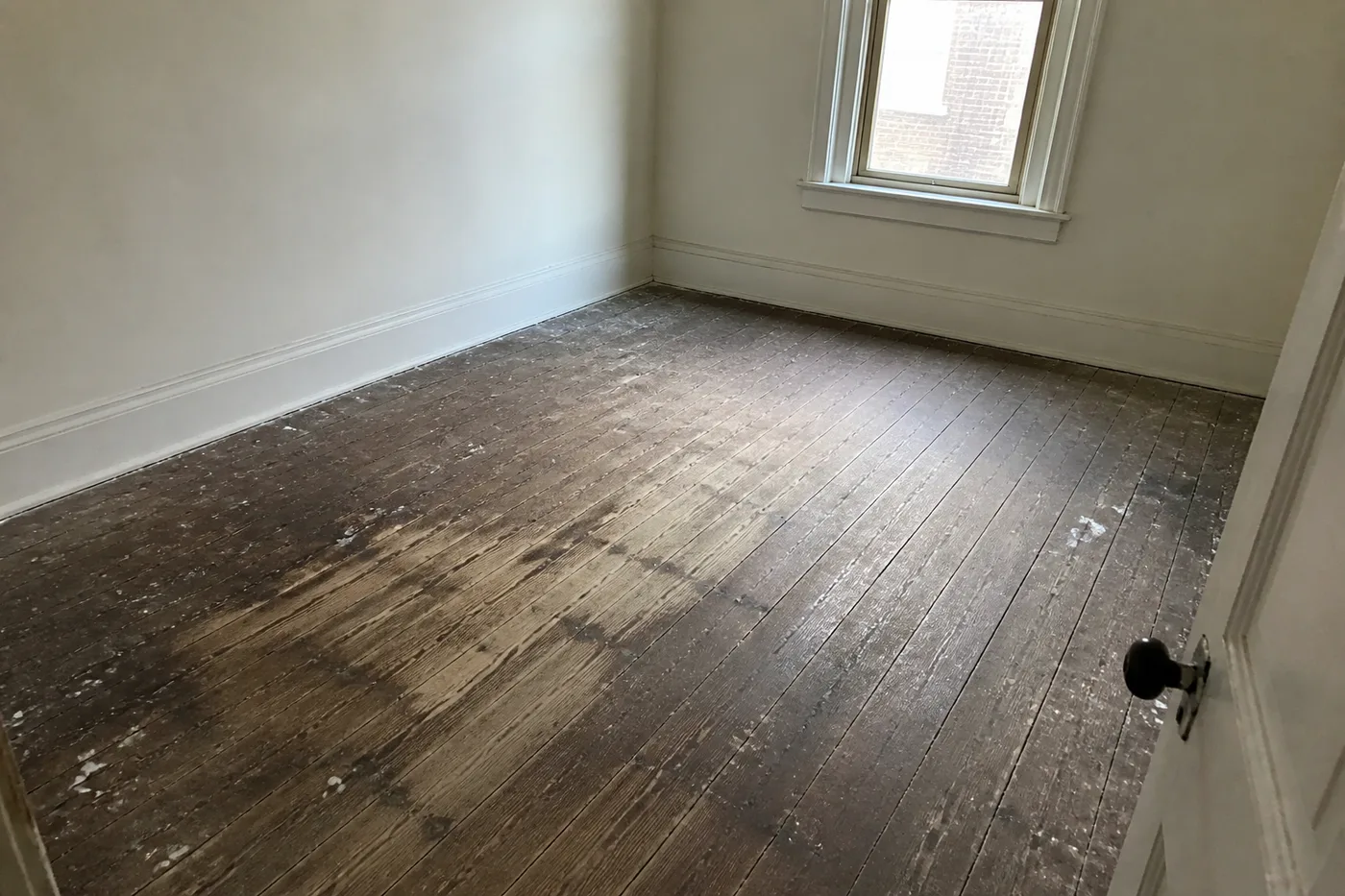
Heart pine brought back
Rowhome upper floor — original wide-plank pine
- Wood
- Wide-plank heart pine
- Finish
- Natural, satin
Original heart pine under decades of grime and old paint spatter. Pine is softer than oak and there is less thickness to work with, so it is sanded more carefully and with finer grits. Finished natural to keep the amber color rather than staining over it.
Not sure which one your floor is?
Most floors are more than one of these at once — gaps and a worn finish, or a water stain in a room that also needs a full refinish. Send a few photos and you’ll get a straight read on which it is, including when the honest answer is that a recoat will do and a full sand would be money wasted. Pricing for both is on the cost page.
Send a photo of yours
A couple of phone pictures is usually enough for a realistic range the same working day.