
Refinish or Replace Hardwood Floors? How to Tell, and What Pays Back When You Sell
Scratches, dents and even bare traffic paths are refinishing jobs. Replacement is for wood that cannot take another sand, or boards that have buckled or soaked up pet urine.
6 min read11 sources cited
On this page
The short answer
- Scratches, dents and bare worn patches are refinishing jobs: NWFA recommends a full sand and refinish for exactly that kind of damage.
- Replacement is for wood beyond saving. A floor sanded too thin needs replacing across that area; buckled or urine-soaked wood is replaced where the damage is.
- Most solid floors can be sanded six to eight times, according to NWFA. Below 3/32 of an inch of wood above the tongue, sanding is not recommended.
- Before a sale, NAR’s 2022 estimates put refinishing at 147% of its cost recovered, against 118% for new wood flooring.
Refinish or replace?
Usually refinish. Scratches, dents, a dull finish and even worn-through traffic paths are sanding jobs. Replacement is for wood that is beyond saving: sanded too thin to take another sand, buckled, or soaked through by pet urine. For buckling and stains, that means the damaged area, not necessarily the room. The rest of this page is how to tell which you have.
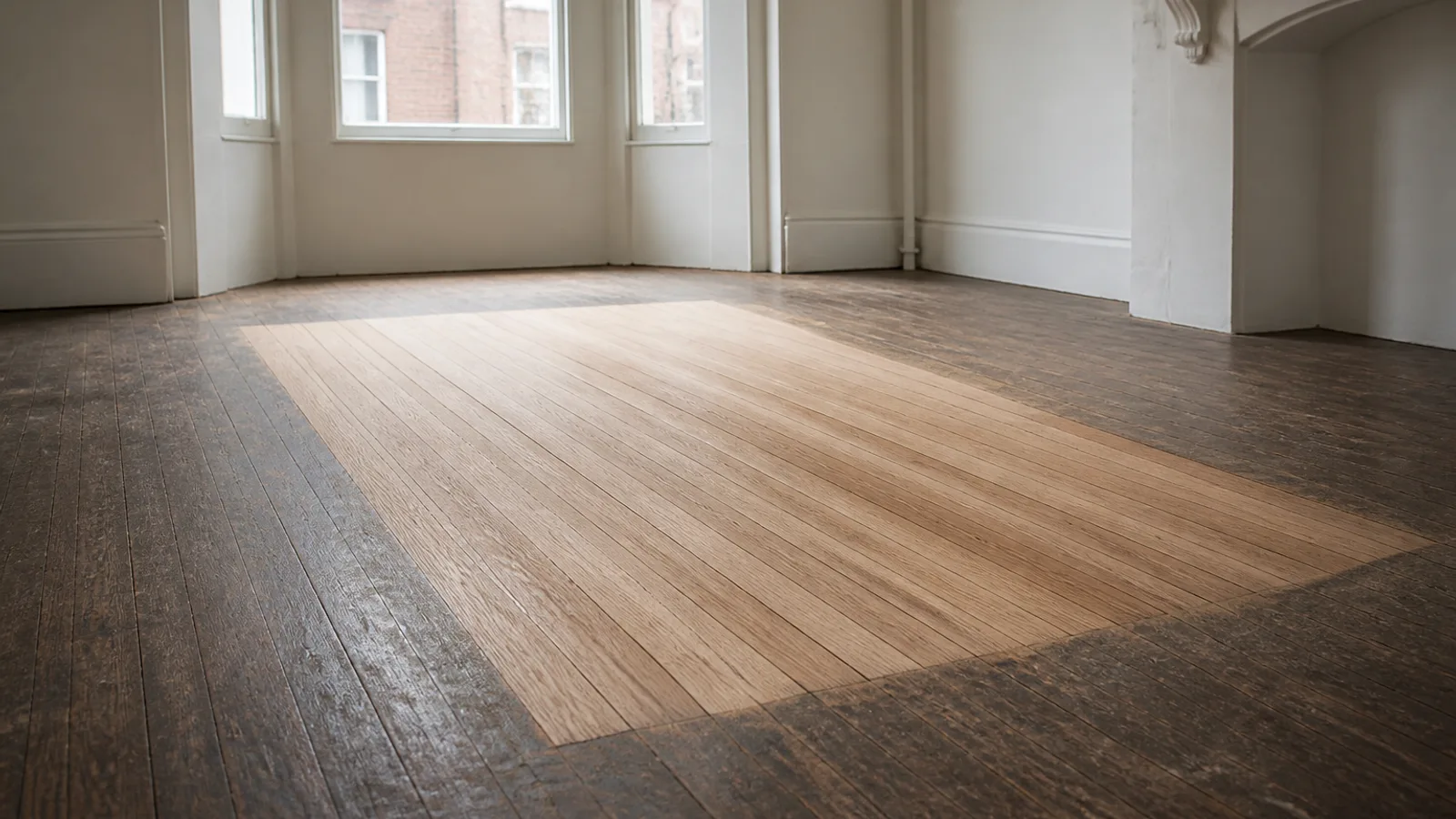
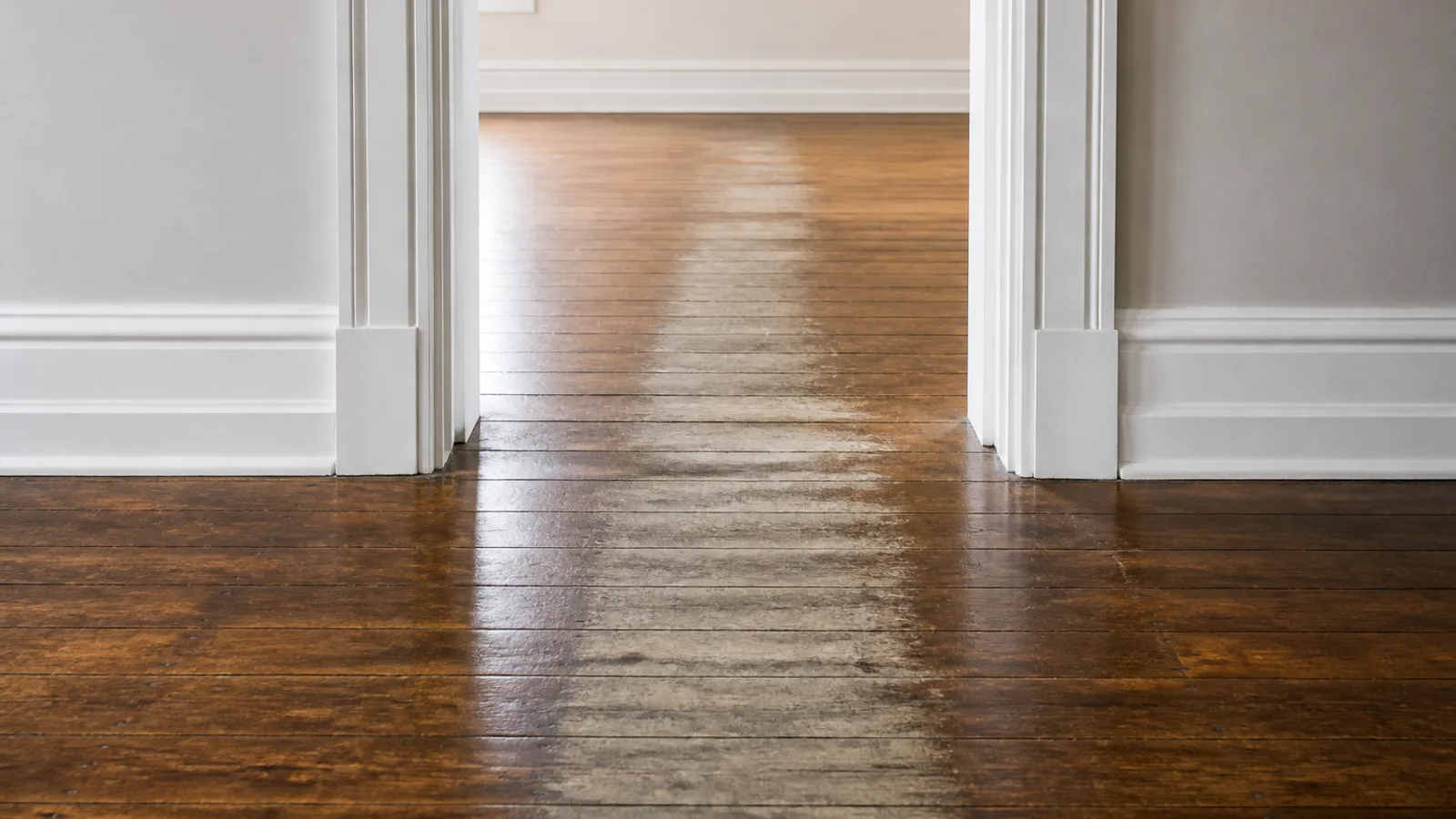
The National Wood Flooring Association (NWFA) draws the line here: “A complete sand and refinish is recommended when there is damage to the wood floor like deep scratches, dents, and other flooring damage. It is also recommended when the finish has worn away, and the bare wood is exposed.”[1] Note what is on that list: damage that looks serious is ordinary sanding work. If the floor is only dull, you may not even need that: see screen and recoat vs a full refinish.
How much wood is left decides it
A refinish sands a thin layer off the top of every board, so the real question is how many of those layers are left. NWFA’s vice president of technical standards, training and certification puts it this way: “Generally speaking, most solid wood floors can be sanded six to eight times during their overall service-life. A traditional sand job will remove 1/32” to 1/16” of actual material from the surface of the floor.”[2]
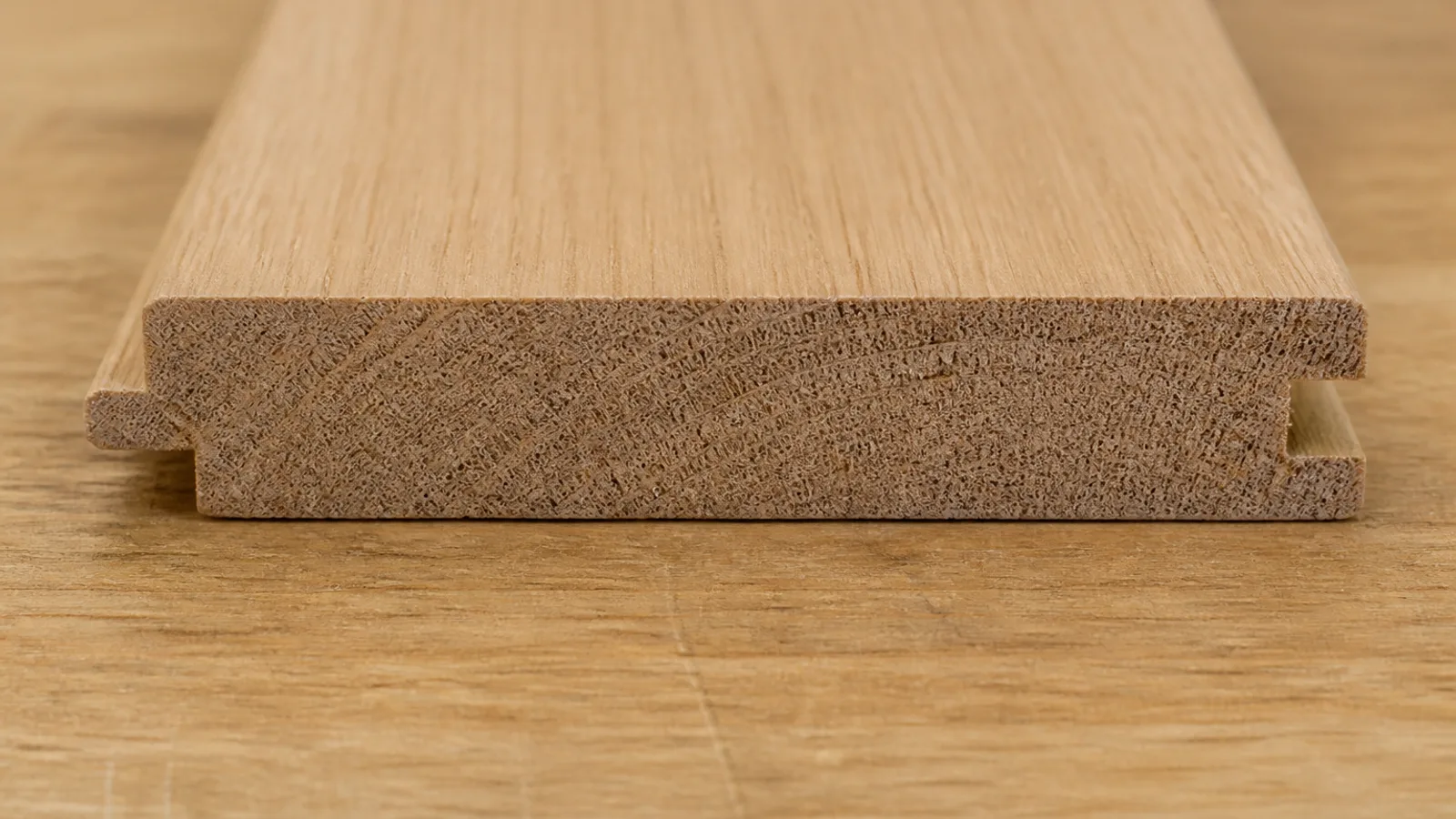
What matters is the wood above the tongue, the part that locks each board to the next. “Solid hardwood floors typically have a wear layer of around ¼” or more,” and “Where the wear layer is less than 3/32” (2.38mm), sanding is not recommended.”[2] Go past it and, as one veteran trainer writes in Wood Floor Business, “you are going to hit the fasteners, rendering the floor useless.”[4] That is the point where a floor genuinely needs replacing.
When boards really do need replacing
Apart from a floor sanded too thin, four situations can push past what sanding fixes. In these, replacement covers the damaged area rather than the whole floor.
- Buckling. NWFA’s installation guidelines are unambiguous: “A buckled wood floor requires replacement wherever the buckling has occurred. Once the flooring has buckled, the fasteners or adhesives are no longer effective, and the system will never return to its original state.”[5] See buckled floor repair.
- Water damage, sometimes. Not every wet floor is lost: “Many times, minor damage will dissipate or even completely disappear as the flooring dries out over time.”[5] The rule is to wait: “Cupped floors should not be sanded until the moisture problem has been corrected and the moisture content of the wood flooring and the subfloor have stabilized and are equalized.”[6] More on water-damaged floors.
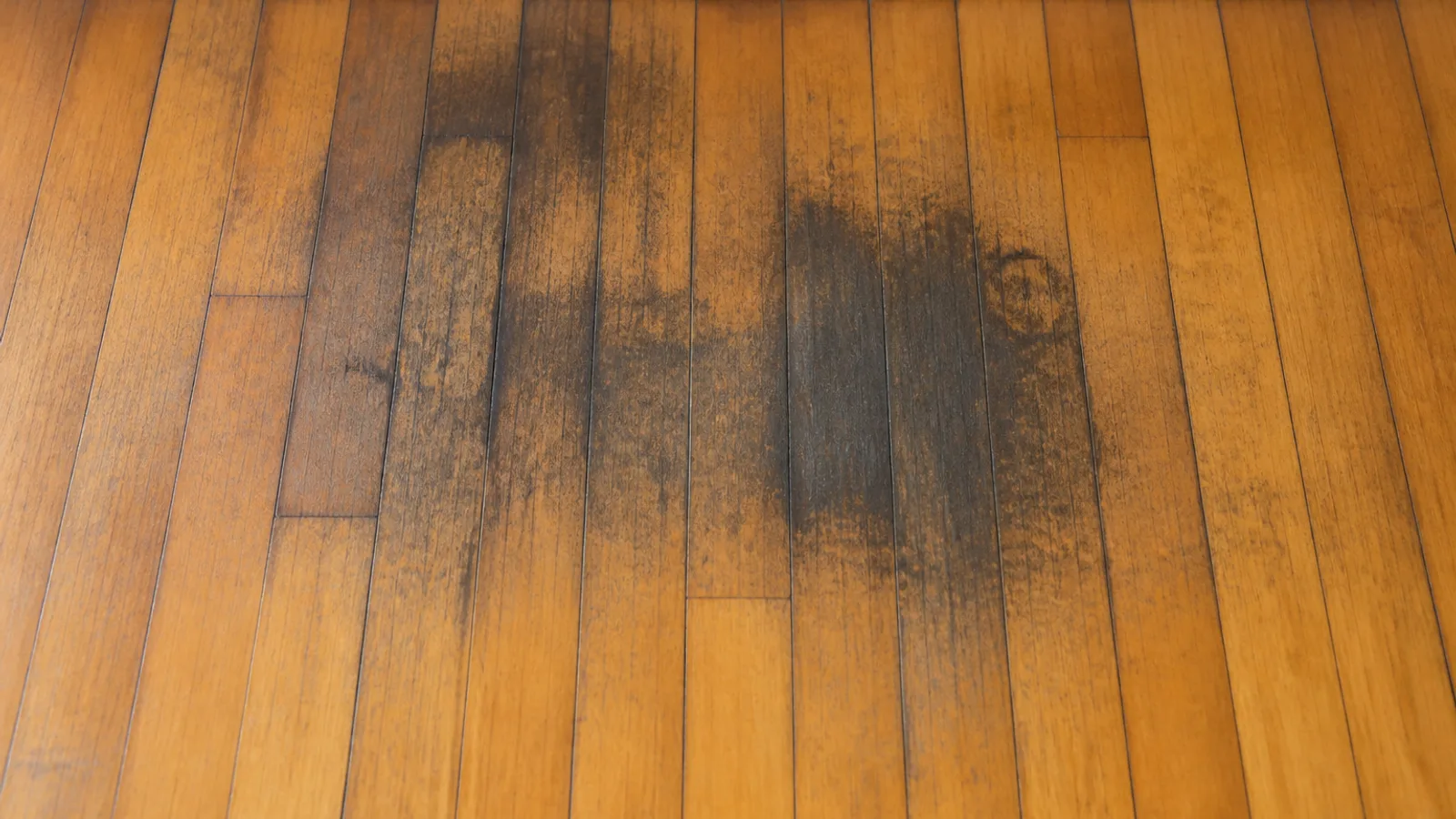
- Deep pet urine stains. NWFA notes that “Oftentimes stains require resanding and/or replacement of the affected areas.”[5] The same trainer explains why: the urine “has soaked into the floor through the gaps or cracks down to the tongues and grooves and beyond,” so for a pristine floor “the best option is to remove the stained wood in question and weave in new.”[7] Our pet stain page covers how to tell how deep yours go.
- A failing subfloor. After water, “As a hidden condition, the subfloor may be compromised further than the wood floor above it.”[5]
Replace a few boards, refinish the rest
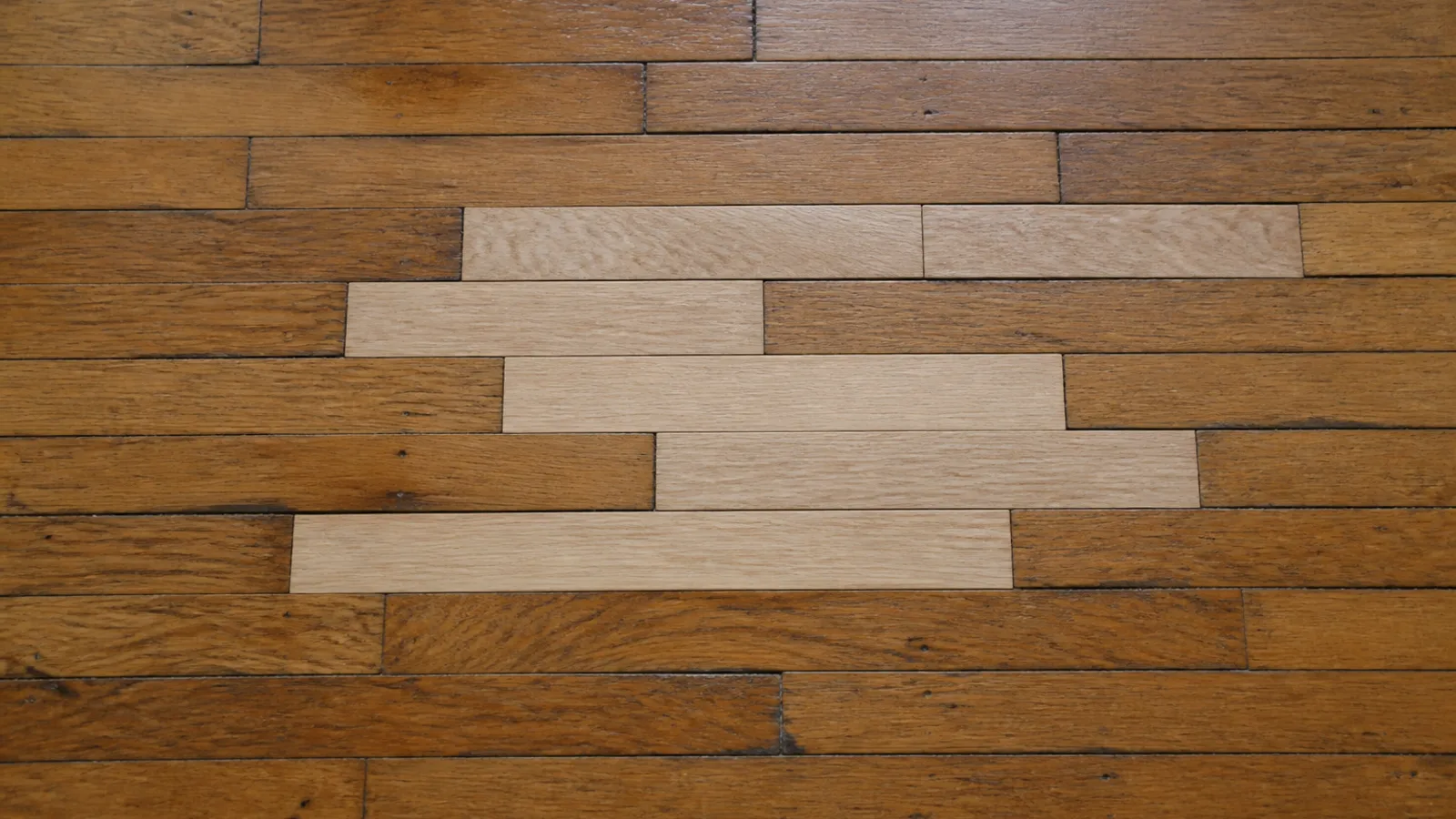
“Replace” rarely means the whole floor. In NWFA’s words, “Board replacement may include an individual board or a grouping of boards.”[5] The new wood does not have to come from the original mill: “Replacement boards do not have to be from the original manufacturer, as long as the tongue and groove profile, width, bevel, edge profile, cut of wood, and grade all match.”[5]
Unfinished replacement boards still have to be blended in. NWFA’s instruction for them is to “refinish to match the surrounding flooring.”[5] What that work looks like on a Baltimore floor is on our hardwood floor repair page.
Before you sell: what pays back
If you are deciding with a sale in mind, the best national numbers favor refinishing. The National Association of REALTORS® 2022 Remodeling Impact Report found that for interior projects “the highest percentage cost recovered was from refinishing hardwood floors at 147 percent, new wood flooring at 118 percent”.[8]
What agents estimate you get back
Share of the project's cost recovered at sale, national estimates, 2022.
Refinish hardwood floors
$3,400 cost, $5,000 estimated value added at resale
147%
New wood flooring
$5,500 cost, $6,500 estimated value added at resale
118%
The same report puts the share of REALTORS® who recommend refinishing hardwood floors before selling at 22%, against 13% for new wood flooring.[8] Read the figures for what they are: estimates for a hypothetical 2,495 sq ft house “with no hidden issues”, not what your house will sell for.[8] Buyers do look for the wood itself: in a 2024 study by the National Association of Home Builders, “hardwood for the main level (81%)” was rated essential or desirable.[9]
What each one costs
This Old House, updated June 2026, says “Flooring pros usually charge $3–$8 per square foot to refinish hardwood floors”.[10] For a new floor, “The average cost to install hardwood floors is $6–$18 per square foot, including labor and materials,” and it lists removal among the hidden extras: “Taking out old carpets, tiles, or glued-down floors takes extra time and includes disposal fees.”[11] Both ranges are national, compiled from cost-guide data, not Baltimore quotes. What moves a real number here is on our refinishing cost page.
Not sure which side of the line your floor is on? Describe it in the form below: what the worst spots look like, whether anything has been wet, and whether you can see the edge of a board at a floor vent. Photos of those three things usually settle it.
Common questions
Is it cheaper to refinish or replace hardwood floors?
Refinishing is usually cheaper. This Old House, in guides updated in June 2026, says flooring pros “usually charge $3–$8 per square foot to refinish hardwood floors”, while “the average cost to install hardwood floors is $6–$18 per square foot, including labor and materials”, and it lists removing some old floors as a hidden extra. Both ranges are national figures compiled from cost-guide data, not Baltimore quotes. Where only some boards are damaged, replacing those boards and refinishing to match is a middle path.
Does refinishing hardwood floors increase home value?
The best national estimate says yes. In the National Association of REALTORS 2022 Remodeling Impact Report, refinishing hardwood floors had the highest cost recovery of any interior project: a $3,400 job with an estimated $5,000 added at sale, or 147 percent. New wood flooring came in at 118 percent. These are agents’ and remodelers’ estimates for a typical house with no hidden issues, not measured sale prices, so treat them as a guide rather than a promise for your home.
Should I refinish hardwood floors before selling?
Often, yes, if the floor is worn but sound. In NAR’s 2022 Remodeling Impact Report, the share of REALTORS who recommend refinishing hardwood floors before selling was 22 percent, against 13 percent for new wood flooring, and refinishing showed the higher estimated cost recovery. A 2024 National Association of Home Builders study found hardwood on the main level rated essential or desirable by 81 percent of buyers. The exception is a floor that cannot take another sand, or boards that have buckled or soaked up pet urine; those need replacing first.
How many times can you refinish hardwood floors?
NWFA says that “generally speaking, most solid wood floors can be sanded six to eight times during their overall service-life,” with each traditional sand removing 1/32 to 1/16 of an inch. The limit is the wood above the tongue: solid floors typically start with about a quarter of an inch, and where it is less than 3/32 of an inch, sanding is not recommended. You can often check yours at a floor vent or by removing a threshold molding.
Sources
Every factual claim in this article comes from one of these.
- Refinishing Your Floors · National Wood Flooring Association
- How Many Times Can a Wood Floor Be Sanded? · Hardwood Floors Magazine (NWFA), April 2025
- Refinish Your Floor · Hardwood Floors Magazine (NWFA), April 2022
- How Do You Know if a Wood Floor Can Be Sanded Again? · Wood Floor Business, March 2024
- NWFA Installation Guidelines (2025 edition) · National Wood Flooring Association
- Can the Floor Withstand a Resand? Sanding Factory-finished Flooring · Hardwood Floors Magazine (NWFA), March 2019
- Options for Fixing the Dreaded Pet Stains on Wood Floors · Wood Floor Business, March 2017
- 2022 Remodeling Impact Report · National Association of REALTORS® and NARI
- Outdoor Features and a Laundry Room Among Most Wanted Features · National Association of Home Builders (Eye on Housing), April 2024
- How Much Does It Cost To Refinish Hardwood Floors? · This Old House, updated June 2026
- How Much Does Hardwood Flooring Cost? · This Old House, updated June 2026