
Water-Damaged Floor Repair in BaltimoreWet floor? What you do in the first 48 hours matters most
A burst pipe, an overflowed tub, a leak under the fridge: water and hardwood are a bad mix, but a wet floor is not automatically a dead floor. Here's how to tell what can be saved, and what to do right now.
First: stop the water, then dry — don’t sand, don’t panic
- Stop the source and get standing water up immediately: towels, mop, wet-vac.
- Move rugs and furniture off the wet area. Rugs trap moisture underneath and make it worse.
- Run fans and a dehumidifier for days, not hours. Wood gives up moisture slowly.
- Don’t rush to refinish. Boards often look their worst while still wet. Sanding swollen wood locks the distortion in — assessment happens after drying.
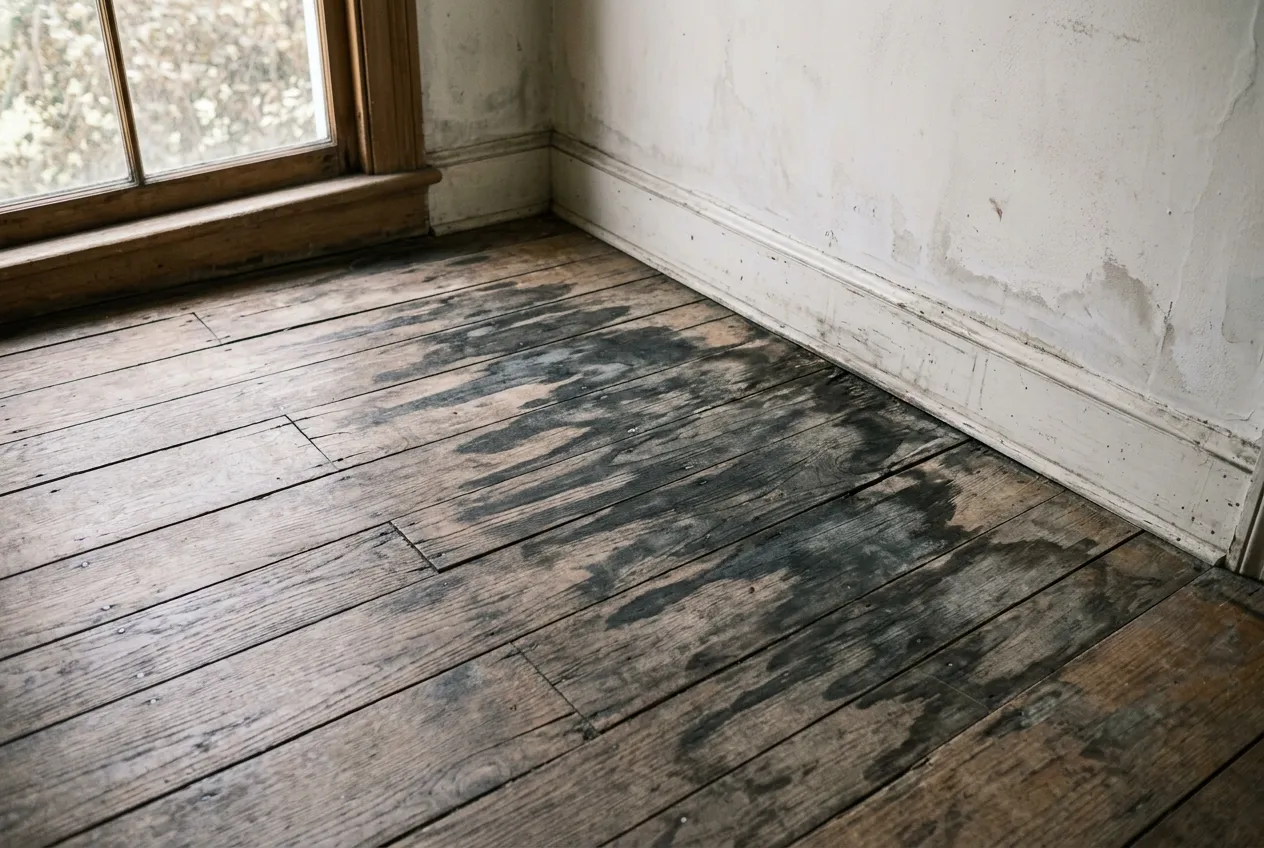
What water does to a hardwood floor
Boards absorb water through their edges and swell. Mild exposure shows as cupping — edges higher than centers, a washboard feel underfoot (more on cupping and warping here). Heavier exposure lifts boards off the subfloor entirely: buckling. Long, slow leaks leave black or gray staining where water sat in the wood, and can soak through into the subfloor — which is why a proper assessment looks underneath, not just at the surface.
What can be saved — honestly
Mild cupping that has fully dried can often be sanded flat and refinished. Localized damage — a few stained or distorted boards — is a board-replacement repair, with the new boards laced into the old floor. Widespread buckling, delaminated boards, or a soaked subfloor mean replacing sections rather than rescuing them. The deciding factors are how much water, for how long, and how quickly drying started — which is why those first 48 hours matter.
Insurance: photograph everything, today
Sudden water damage — a burst pipe, an appliance failure — is the kind of event homeowners policies typically respond to, and floor replacement is exactly the sort of cost worth claiming. Before anything is moved or repaired, photograph the water source, the standing water and every affected board. Our insurance claims guide walks through what adjusters look for and how to document properly. What the work itself involves is on the repair cost page.
Common questions
Can water damaged hardwood floors be repaired?
Often, yes. Mild cupping that has fully dried can usually be sanded flat and refinished, and localized damage is handled by replacing the affected boards and lacing new wood into the old floor. Widespread buckling or a water-soaked subfloor usually means replacing that section of floor. The biggest factor is how quickly the floor was dried after the water event.
What this looks like
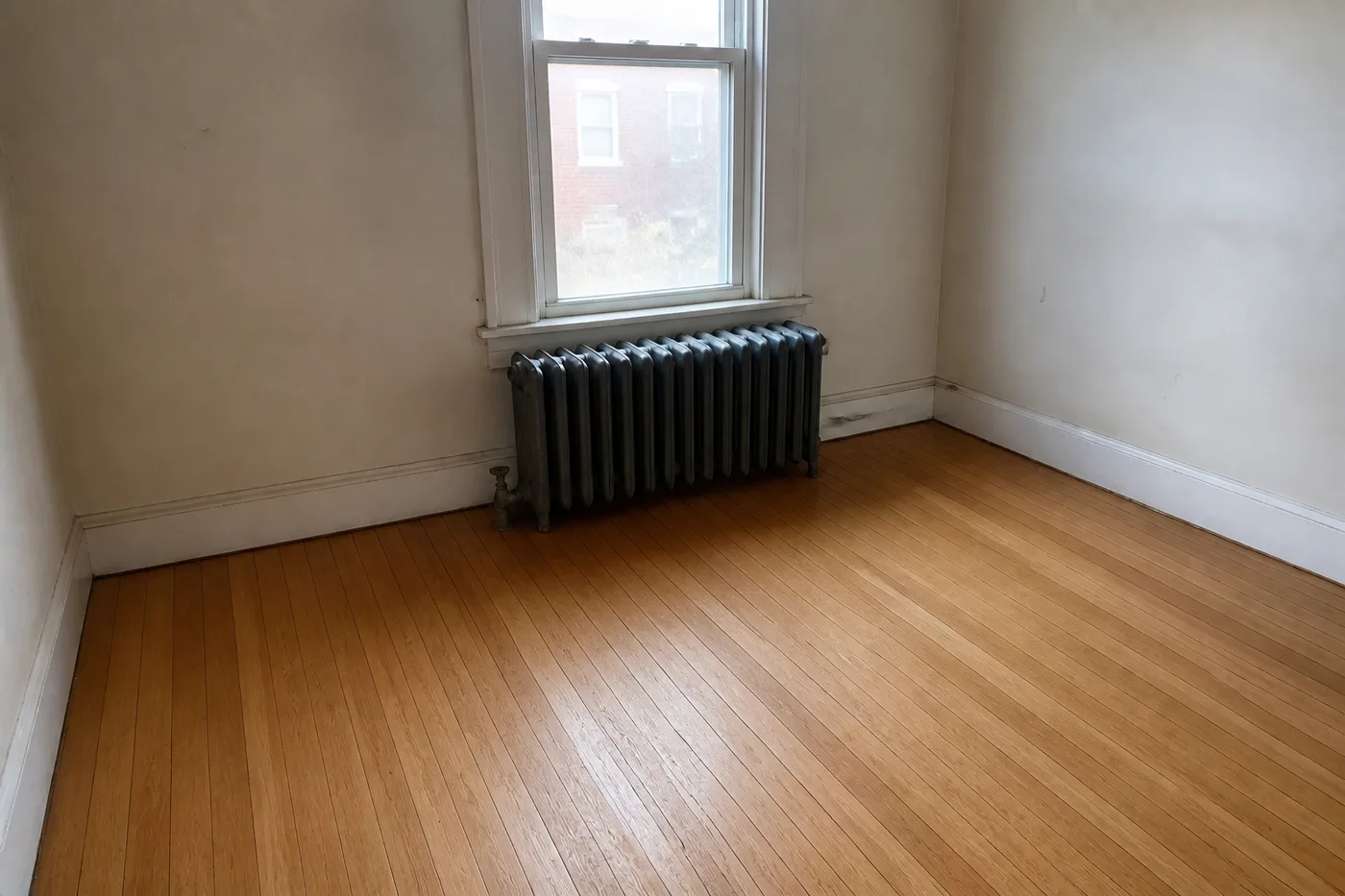
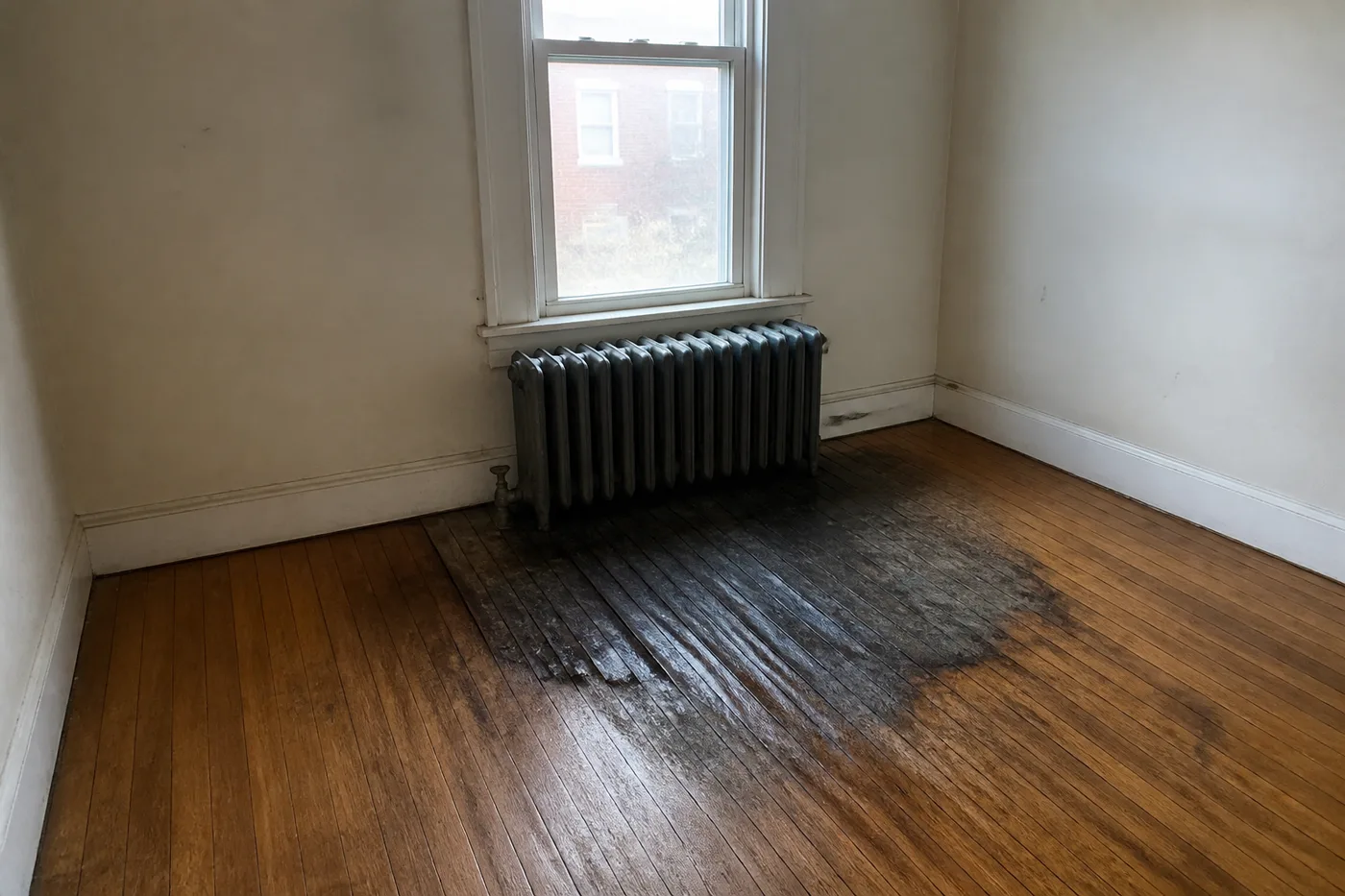
Rowhome bedroom, floor beneath a cast-iron radiator
A slow radiator leak had blackened the wood and cupped the board edges. Black staining that has reached the wood does not sand out. The affected boards were cut out and replaced, the new lengths staggered so the joints do not line up, then the whole room sanded flat and refinished.
About these pictures: they illustrate what each type of job involves and the condition we start from — they are examples, not photographs of past customers’ homes. The descriptions of the work are exactly how we do it.
Get eyes on it quickly
Water damage is time-sensitive, and photos are usually enough for a first assessment. Send them through and you’ll hear back the same working day.
Standing on a wet floor right now?
Call — you'll get the do-this-now steps over the phone, free.