
Squeaky Floor Repair in BaltimoreEvery squeak is just wood moving, the fix is stopping the movement
A squeaky hardwood floor isn't failing, it's rubbing. Something that should be fixed in place is shifting a fraction of an inch under your weight. Find that movement and pin it down, and the noise stops.
Where the noise actually comes from
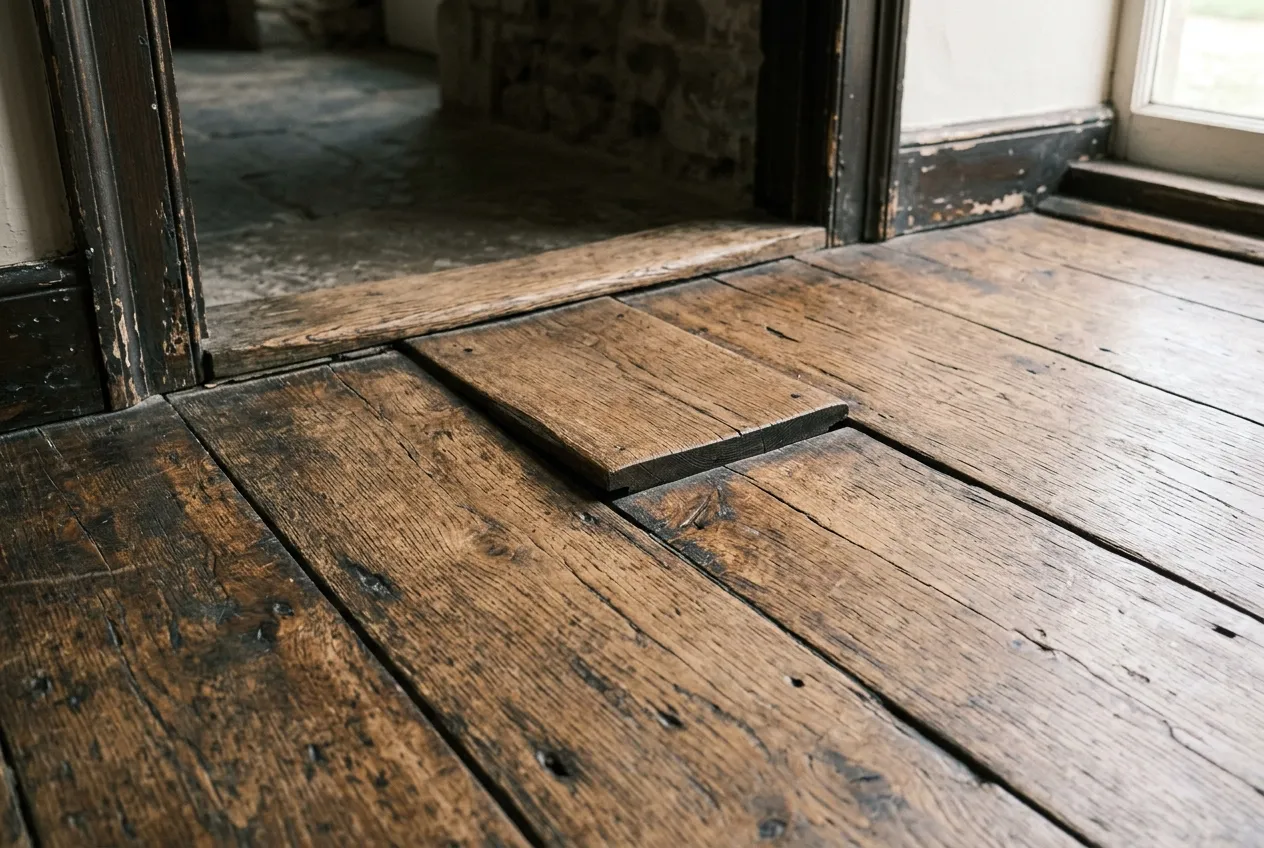
There are three rubbing points, and diagnosing which one you have is most of the job. Board against board: two finish boards flexing past each other along their edges, the classic sharp creak. Board against subfloor: the hardwood lifting slightly off the layer beneath as nails lose their grip, then dropping back: more of a crunch or a pop. And subfloor against joist: the whole assembly moving on the framing, which makes a deeper groan and often means the subfloor itself needs attention rather than the boards on top.
Season matters too. Baltimore winters are dry indoors, radiator and forced-air heat pull moisture out of the house, so boards shrink slightly, fastener holes loosen, and floors that were silent all summer start talking in January. A squeak that appears with the heating season and fades in spring is following the humidity, not getting worse.
Fixing squeaks from above
Most squeaks get fixed from the top, working through or between the finish boards. Screws driven at an angle through the board into the joist below pull the loose layers tight again: done properly, with pilot holes and the heads concealed, the repair is close to invisible in the grain. Specialty fasteners exist for exactly this: scored screws that snap off below the surface after they’ve drawn the board down, leaving a hole small enough to fill and forget. Where two boards are rubbing edge to edge, sometimes the answer is simpler still: a touch of lubricant worked into the joint, or a thin shim easing the contact. The skill is less in the fastener and more in finding the joist, hitting it, and leaving nothing visible behind.
Fixing squeaks from below
When the noisy floor is over a basement or crawl space, which covers the first floor of most Baltimore rowhomes, working from underneath is often better, because nothing touches the finished surface at all. Gaps between joist and subfloor get shimmed or filled with adhesive, loose runs get screwed tight from below, and a flexing joist can be blocked or sistered while everything is exposed. From below you can also watch the floor move while someone walks the squeaky spot above, which turns guesswork into a precise fix.
An honest note about old floors
A pre-1940 rowhome floor that is completely silent is rare, and chasing every last squeak has real diminishing returns. The first pass — pinning down the loose spots in hallways, doorways and the routes you walk every day — removes most of the noise for modest effort. After that, each remaining squeak costs more to find and fix than the last, and some measure of sound in a century-old floor is fairly called character. The honest approach is to fix the squeaks that bother you, note the ones that don’t, and stop. If boards are also visibly loose, damaged or separating, that’s a floor repair question rather than a squeak question — and seasonal gaps between boards often travel with seasonal squeaks, for the same humidity reasons.
How long it takes
Most squeak jobs are measured in hours, not days. A handful of noisy spots fixed from above or below is typically a single visit; a whole floor with dozens of trouble spots, or squeaks that turn out to be subfloor problems, can run longer. If the squeaky room is part of a bigger project, the cost calculator gives a starting point for the whole job.
Tell us where it squeaks
Which room, where in the room, and whether there’s a basement or crawl space underneath — that’s enough for a first read on how fixable it is and roughly what’s involved.
Floor announcing your every step?
Call — most squeaks are an afternoon's work, and you'll know quickly if yours is.