
Floor Gap Repair in BaltimoreGaps between floorboards: some are a problem, most are just winter
Wood moves with the seasons, and the gaps that open between boards every winter are the visible proof. The honest question isn't how to fill every gap: it's which gaps should be filled at all.
Why gaps open in the first place
Hardwood swells and shrinks across its width as humidity changes. Baltimore summers are humid, so boards take on moisture and press together; winters are dry indoors, radiator heat especially wrings the air out of an old rowhome, so the same boards give that moisture back and shrink. The result is gaps that open around the start of the heating season and quietly close again by early summer. In a pre-1940 floor of narrow-strip oak, dozens of boards each shrinking a hair adds up to gaps you can see plainly in raking light.
Old floors exaggerate the effect. Boards that have cupped over the years, or had their edges rounded by generations of sanding and wear, cast shadows that make a modest gap read as a large one. And a floor that has been through many humidity cycles has often lost the crisp edge-to-edge fit it had when new.
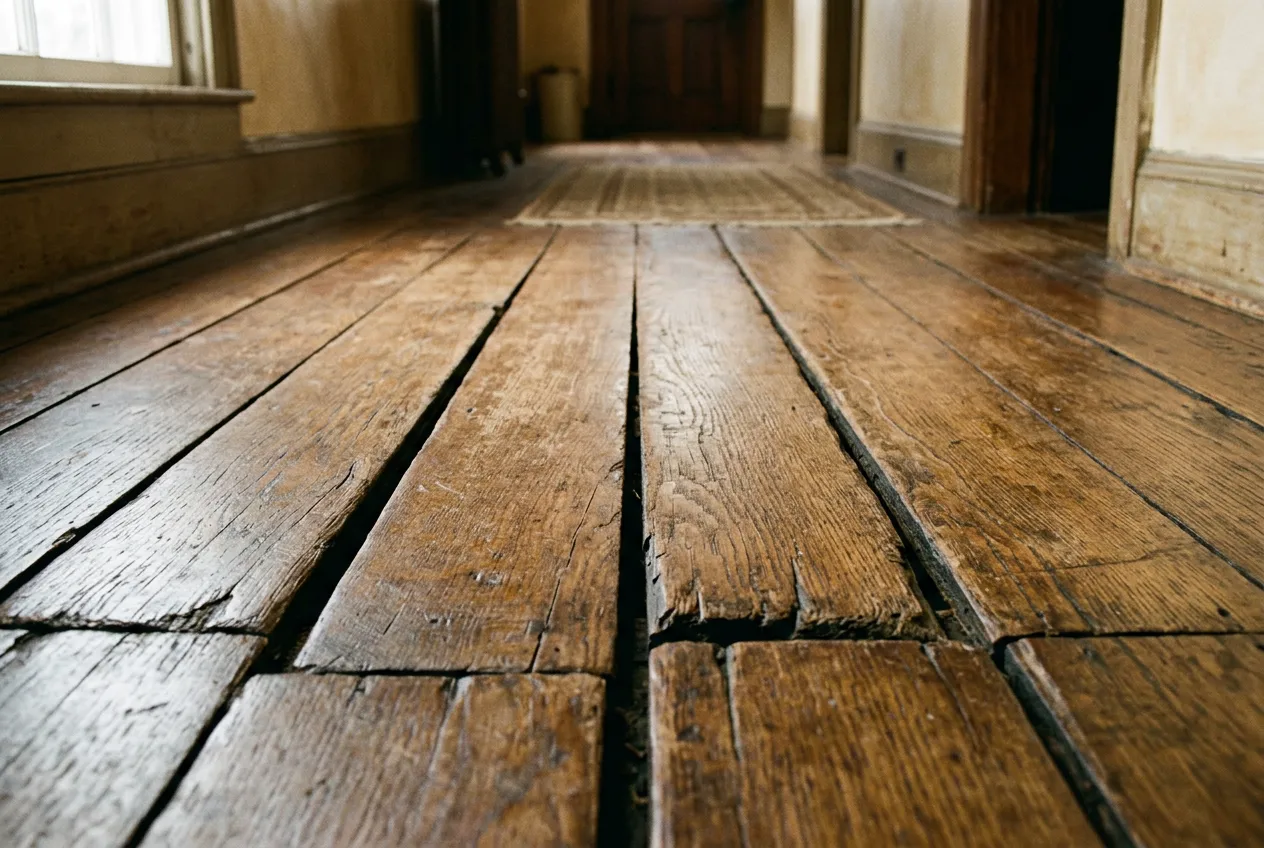
The honest part: seasonal gaps mostly shouldn’t be filled
If a gap closes up in summer, the boards still need that room to move. Fill it with a rigid material and one of two things happens when humidity returns: the filler gets crushed and squeezed out, or the boards, denied their expansion space, press against each other hard enough to cause new problems. Watching a gap through one full season: does it close by July, or is it the same in August as it was in February?: is the single most useful piece of diagnosis, and it costs nothing.
What can be done about year-round gaps
Gaps that stay open through the humid months are fair game. The best-looking fix for a wide, stable gap is a wood sliver: a strip of matching wood glued in, planed flush and finished to blend, which moves and ages like the floor around it. Traditional rope filler, stained to match and pressed into the gap, suits old plank floors and stays slightly flexible. Wood filler and flexible filler compounds are the quick option for hairline gaps, with a caveat worth stating plainly: any filler in a gap that still moves will crack or work loose, usually within a season or two. That’s not bad workmanship, it’s physics: which is why the seasonal-versus-permanent question comes first.
When gapping means something bigger
Widespread gapping, most of a floor, gaps that grow year on year, or gaps alongside loose and damaged boards, sometimes signals that the floor is past spot treatment. Boards that have shrunk permanently or split along their edges are candidates for board replacement, with new stock laced into the existing floor. And where a whole room’s gaps are being addressed at once, it often makes sense to fold the work into a full refinish, so slivers and replacement boards disappear under a uniform new finish instead of standing out against an old one. Gapping boards are also often loose boards, so it’s no coincidence that gappy floors and squeaky floors tend to arrive together.
How long it takes
Filling a handful of stable gaps with slivers or rope is typically a day, including finish touch-up. A whole room treated gap by gap runs longer, and if the work rides along with a refinish, the sanding-and-finishing schedule sets the timeline rather than the gap work itself. Either way, the assessment visit is short: measuring a few gaps and asking what they do in summer answers most of it.
Common questions
Can gaps in hardwood floors be fixed?
Yes — gaps that stay open year-round can be filled with wood slivers, rope filler or filler compound, with slivers giving the most durable, best-looking result. Seasonal gaps that close up in humid summer weather are normal wood movement and are usually best left alone, because any filler in a moving gap will crack or squeeze out. Widespread or growing gaps sometimes call for board replacement or a full refinish instead of filling.
What this looks like
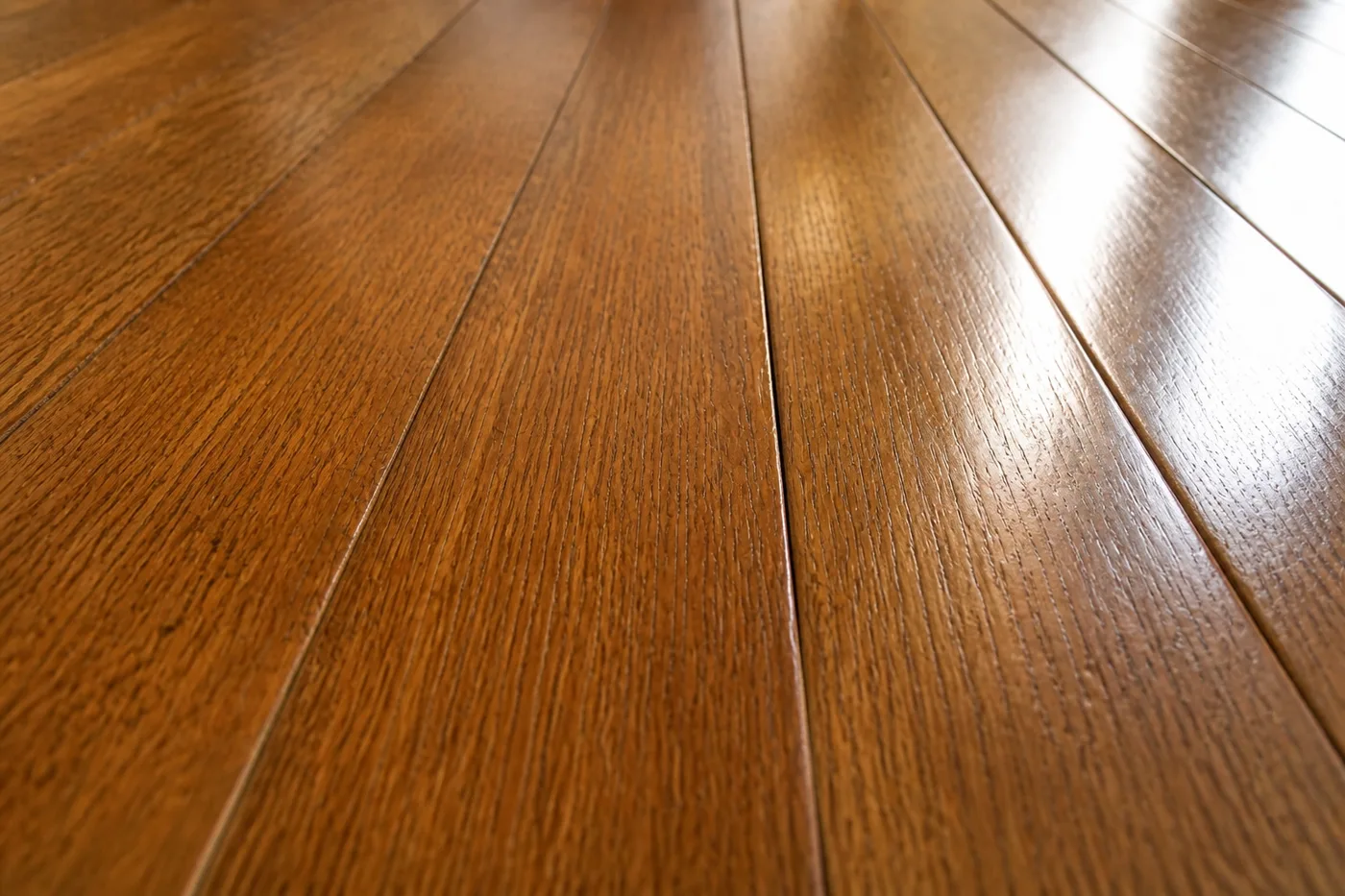
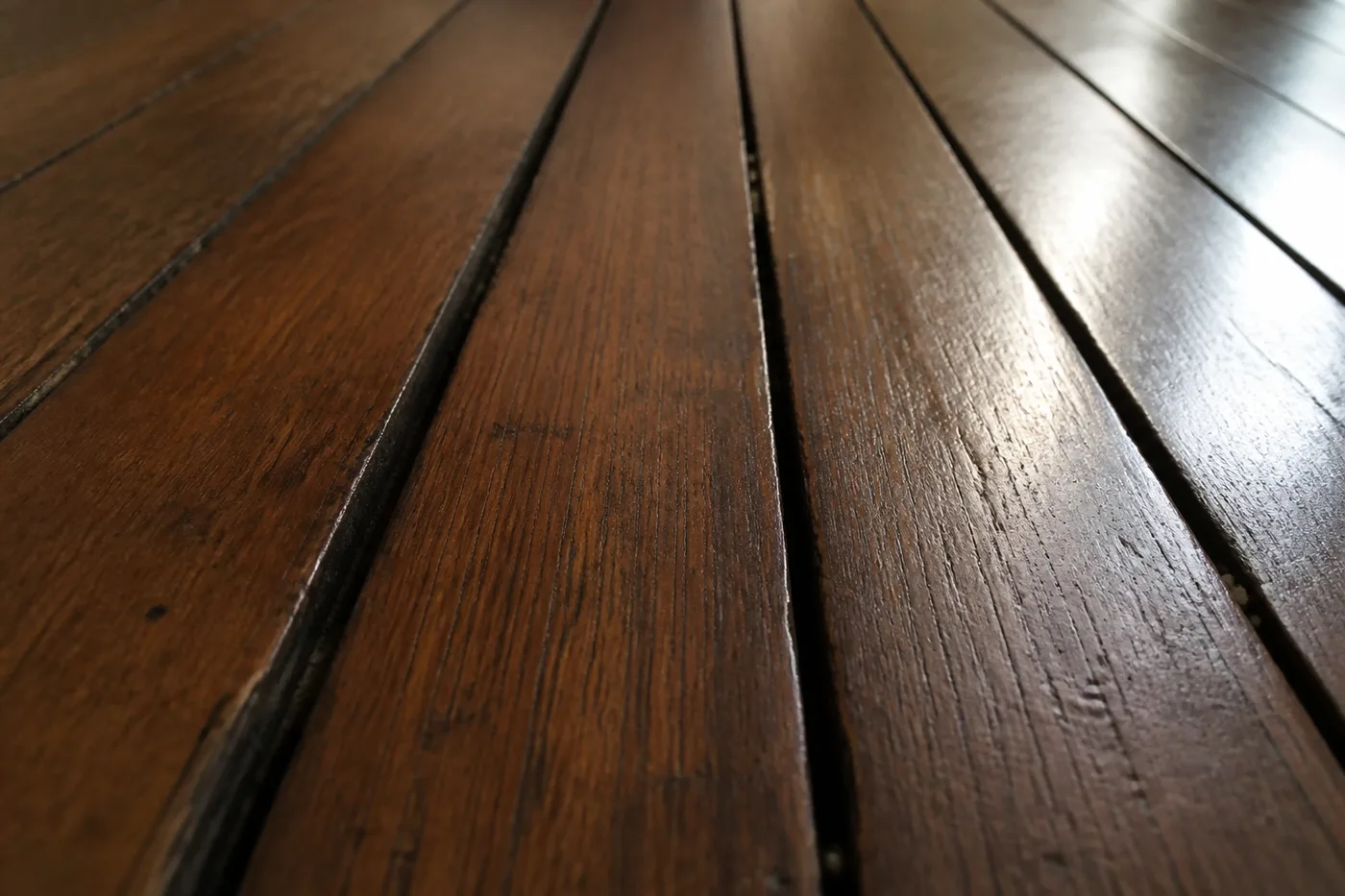
Rowhome upper floor — close detail
Dry winter heat shrinks boards and opens the joints. These were filled after the boards had settled rather than at their widest, then sanded and refinished. Worth knowing: gaps that close again by themselves in summer are seasonal movement and are usually best left alone.
About these pictures: they illustrate what each type of job involves and the condition we start from — they are examples, not photographs of past customers’ homes. The descriptions of the work are exactly how we do it.
Not sure which kind of gaps you have?
A few photos and one question — do they close in summer? — usually settles it. Send them through and you’ll get a straight answer, including when the right call is to leave the floor alone.
Gaps bothering you every winter?
Call — you'll find out in one conversation whether they're worth fixing or worth ignoring.