
Oil-Based vs Water-Based Polyurethane for Floors: What Actually Differs
Neither is categorically tougher — the industry’s own association declines to rank them. What actually differs is colour, how long you are out of the room, and VOCs.
6 min read19 sources cited
On this page
The short answer
- Oil-based for a warm golden floor you can wait a month to put rugs back on. Water-based to keep your oak close to its natural colour and be back to normal in a week.
- Neither is tougher as a class — the National Wood Flooring Association calls both “very durable” and refuses to rank them. Toughness tracks the product, not the type.
- Rugs are the real gap: 3 days on one water-based product, 30 on one oil-based one. Ask which product, and ask for its data sheet.
- Maryland caps clear wood coatings at 275 g/L of VOCs against the federal 450, so the lowest-VOC options here tend to be water-based.
Which one should you choose?
Choose oil-based if you want a warm, golden floor and can live without your rugs for a month. Choose water-based if you want your oak to stay close to the colour it is now, or you need the house back in a week. That is the decision. Everything below is why.
The durability question most people expect to settle it does not. The National Wood Flooring Association (NWFA) calls water-based finishes “normally clear, very durable, and dry quickly” and oil-based ones “amber in color and are very durable”[3] — and declines to rank them.
“Waterborne” is not even one material: Wood Floor Business calls acrylics “not particularly tough unless catalyzed/hardened/co-reacted” and polyurethane acrylics “very tough and are often used in highwear situations.”[2] So the useful question is never oil or water. It is which product, and may I see its data sheet.
Colour is the difference you live with
This is the part you cannot undo without sanding again. Writing in NWFA’s own magazine, the association’s technical advisor says oil-modified polyurethane is “amber in color” and “will continue to amber out from the effects of oxidation and UV rays, so the floor will take on a yellowish cast as the floor ages.”[4] Water-based finishes, he writes, “don’t amber out to the same degree.”[4]
Read that hedge. Water-based is not colourless — one manufacturer says its own water-based floor product “provides a slight amber tone to the floor”[7] — and some makers sell amber versions deliberately.[1]
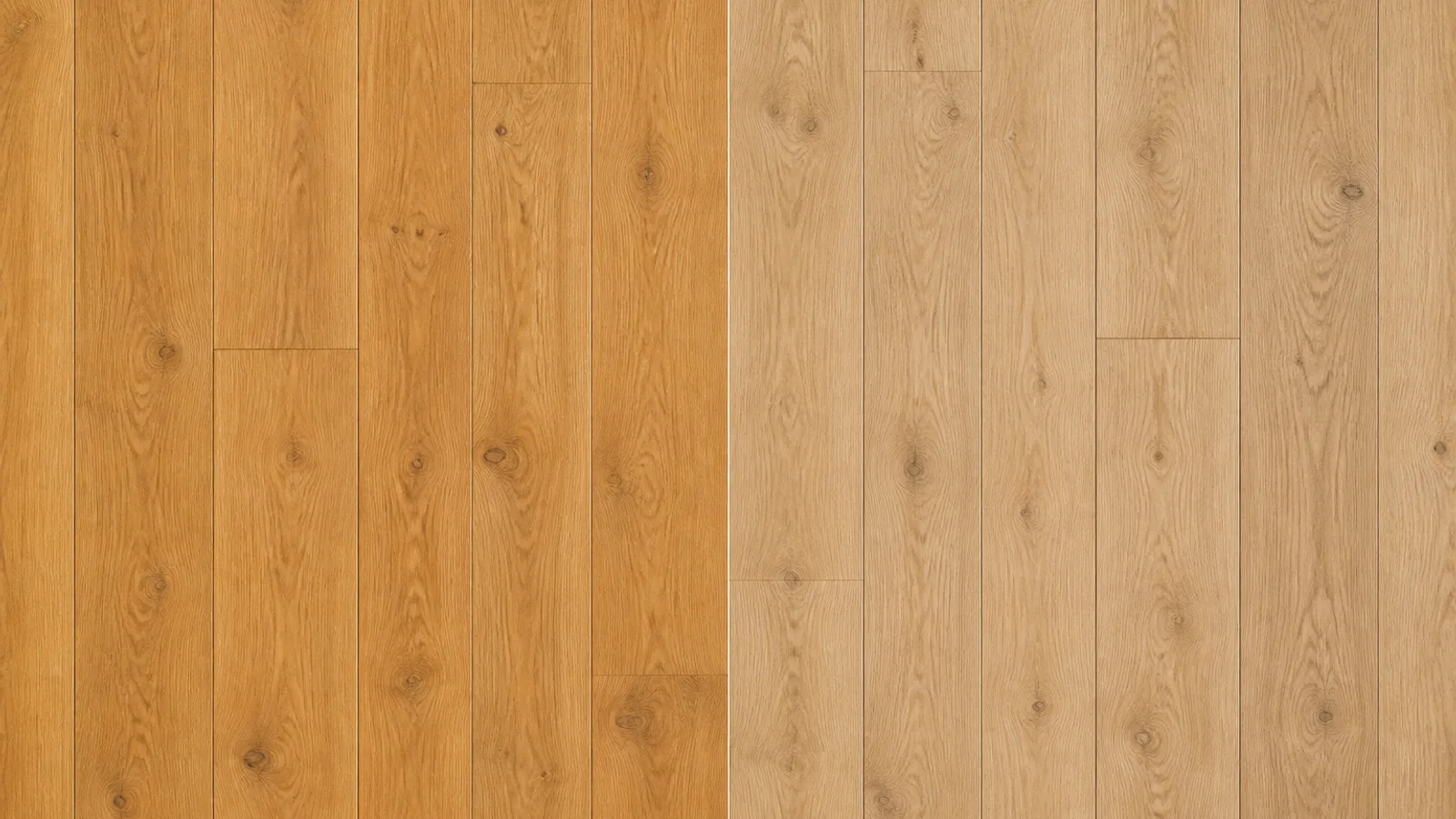
What that does depends on your wood. Red oak, common in Baltimore rowhouses and pre-war semis, already reads warm — NWFA calls it “slightly redder than white oak”[9] — so amber pushes it further. White oak is “light brown; some boards may have a pinkish tint or a slight grayish cast”[10] and takes a cooler look more easily.
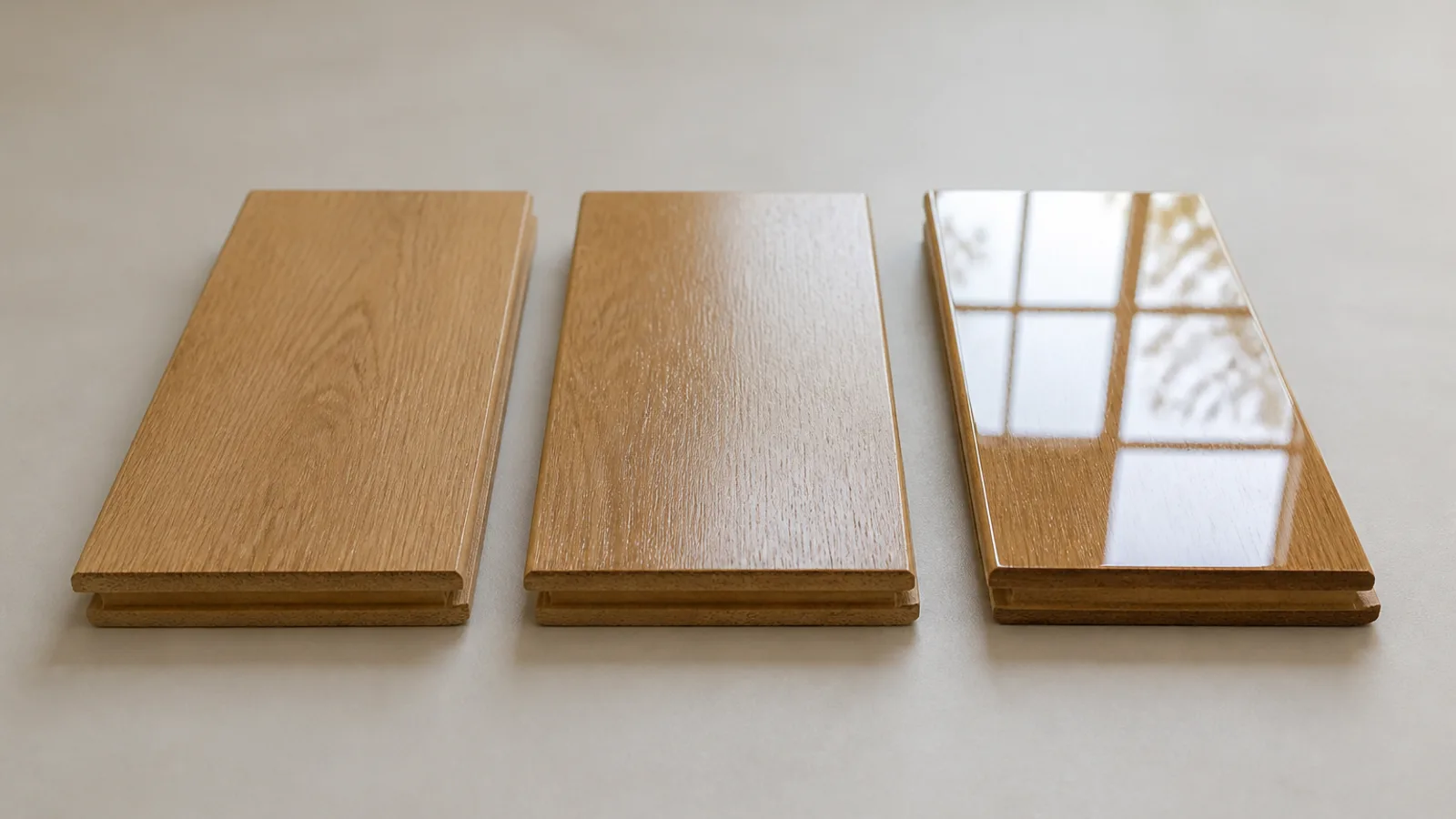
Sheen is a separate choice. NWFA reduces it to one sentence: “The less sheen, the less you will notice small scratches and other normal wear.”[3] It lists four — gloss, semi-gloss, satin and matte — and otherwise calls the choice “a matter of personal preference and lifestyle.”[3] If your floor takes dog claws and school shoes, that first sentence is the argument for satin or matte, and our page on what a refinish can and cannot hide covers the rest.
When you get your house back
This is the question homeowners actually ask. Here is what three manufacturers put in writing.
How long before the rugs go back down?
Straight from three manufacturers' own data sheets
Water-based, two-component
Rugs only once fully cured, and curing takes “approximately 3 days”
3days
Water-based, 275 g/L
“Do not install rugs or clean floors for seven days”
7days
Oil-based, professional
“48 hours before replacing furniture and 30 days before replacing rugs”
30days
Ten times the wait, for the same job — and the two water-based products differ from each other by more than twice. Ask which product, not which type.
These figures also assume good conditions. One sheet specifies 77°F and 50% relative humidity and warns that “lower temperature, higher humidity, lack of air movement or excessive application will extend dry time.”[6] A humid Baltimore August is not those conditions. How the working days themselves run is on our dustless refinishing page.
Smell, fumes, and the Maryland limit
VOCs (volatile organic compounds) are the solvents that evaporate as a finish dries. They are what you smell, and what the regulations count, in grams per litre.
Maryland is stricter than the federal rule. A clear floor polyurethane counts as a “wood coating”, which COMAR defines to include varnishes, sanding sealers and clear stains,[12] and Maryland caps those at 275 g/L.[11] The federal limit for varnishes is 450 g/L.[14] The rule reaches past the shop shelf, too: a person may not “manufacture, blend, repackage for sale, supply, sell, offer for sale, or apply within the State” a coating over the limit.[13] We are not lawyers and we are not telling you a given product is or is not permitted on your floor. The practical upshot is that in Maryland the lowest-VOC options tend to be water-based.
But water-based does not mean harmless, and the category labels overlap: NWFA’s technical advisor puts oil-modified polyurethane at “>275 up to 550 g/L” and waterborne at “0 to 450 g/L.”[4] One water-based floor product warns that it “CONTAINS MATERIAL THAT MAY CAUSE ADVERSE REPRODUCTIVE EFFECTS AND MAY ADVERSELY AFFECT THE DEVELOPING FETUS BASED ON ANIMAL DATA”.[7] That describes the liquid going down, not a floor that has dried — but it is why the job belongs to people with the right kit.
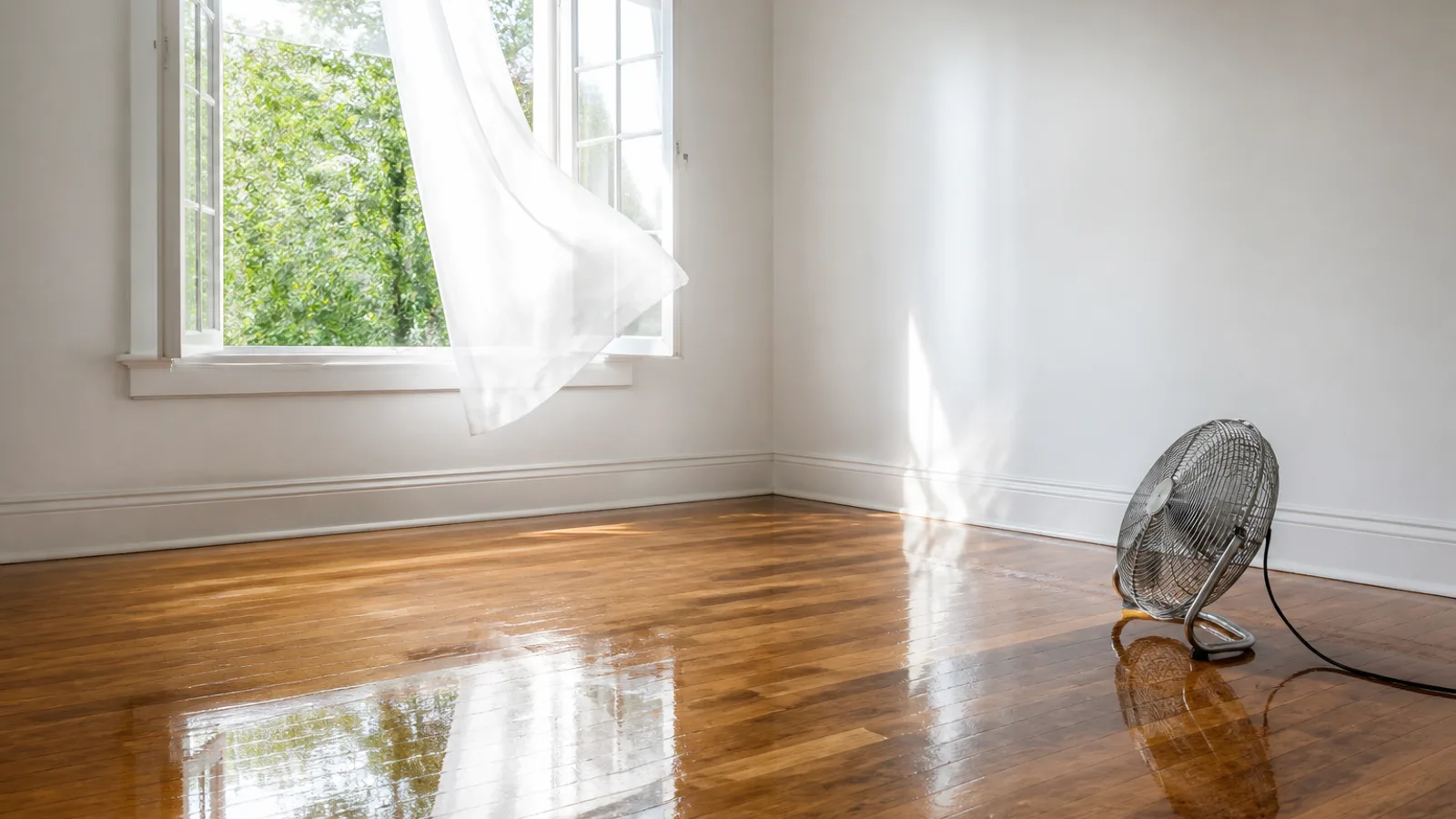
How long should you stay out? No authority publishes a number, so we will not invent one. The sheets say to “open windows and doors… during application and drying”,[6] and the EPA warns that “elevated concentrations can persist in the air long after the activity is completed.”[15] Ask your contractor what they advise for your household.
The mistake that shows up months later
Having your floor stained a colour before it is finished? One failure is worth knowing about, because it does not show on the day.
A finish manufacturer’s chemist, writing in NWFA’s magazine, says there has “always been a preponderance of technical support calls (read: issues!) with coating water-based finishes over oil-based stains, sealers, or finishes.”[16] Oil-based stain carries mineral spirits, and the waterborne coat must not go on “until enough of the solvent has evaporated.”[16] Rush it and you get “a whitish or opaque haze”, which usually fades — but adhesion may already be compromised “enough that the homeowner might complain of peeling later on.”[16]
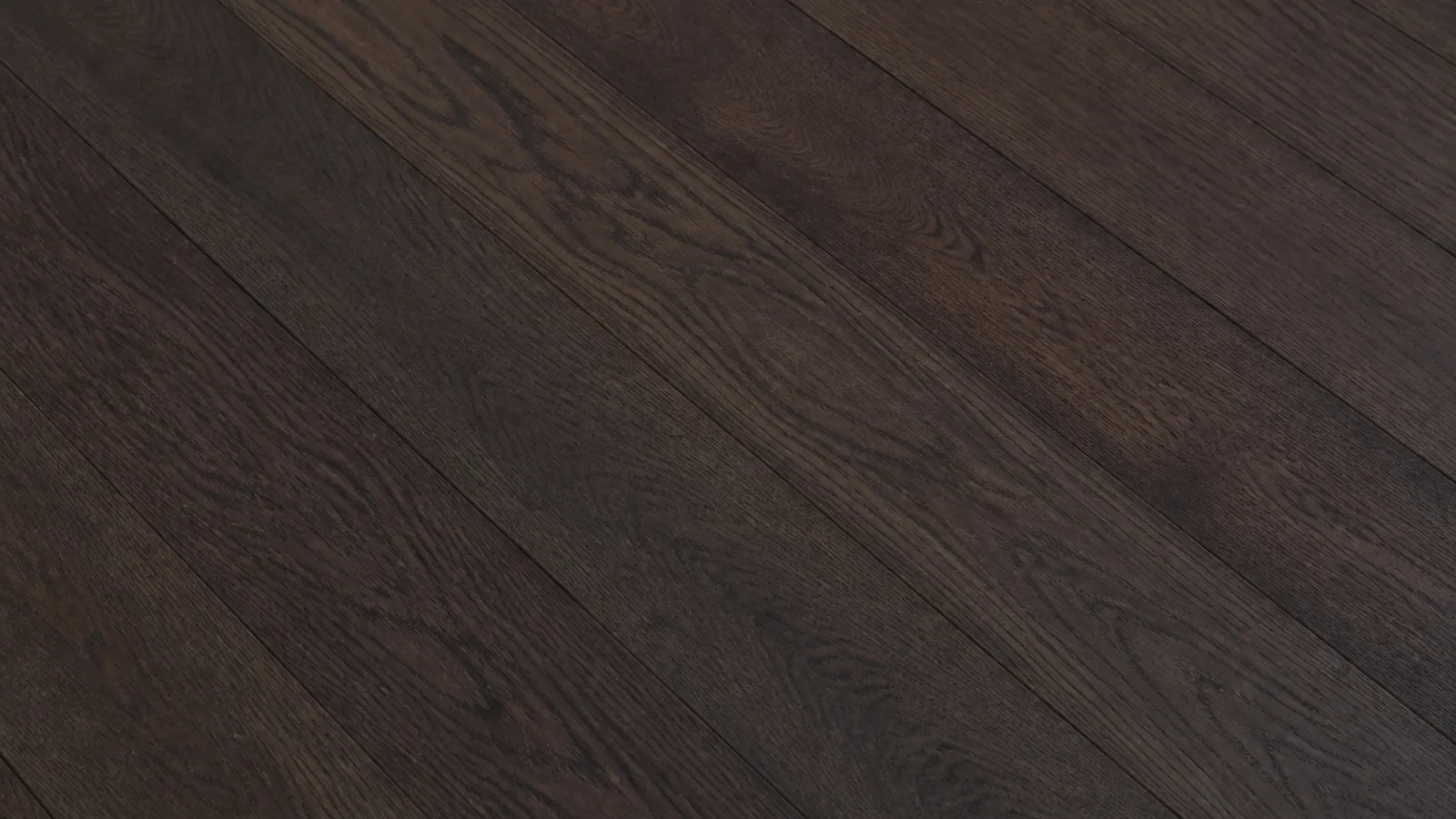
Two things stretch the wait. Colour: on a stain built for this system, drying time before finishing runs “2 hours for wood tones, 6 hours minimum for white and 12-18 hours for Ebony, Spice Brown, Bark and Cocoa.”[17] A dark floor is six times the wait of a natural one. And weather: “the higher the humidity… the lower the evaporation rate of mineral spirits from a stain.”[16]
What to ask before you sign
- Which product exactly, and can I see its data sheet? It answers the rug, the furniture and the smell question at once — and the honest spread is 3 to 30 days.
- Will you put a sample down on my actual floor first? One manufacturer asks for it in capitals: “ALWAYS PREPARE A SAMPLE OR TEST AREA TO DETERMINE COMPATIBILITY, APPEARANCE AND DESIRED RESULTS”.[8]
- Are you EPA Lead-Safe certified? Much of Baltimore predates 1978, and the EPA requires anyone paid for work that “disturbs painted surfaces” in homes built before 1978 to be certified.[18] Floor work reaches painted baseboards and shoe moulding.
- What should I clean it with afterwards? NWFA makes this the contractor’s job, and says no wet mops or steam mops, which “will damage the finish and the wood.”[19]
On price: no primary source publishes a per-square-foot figure, so we will not invent one. The trade press does list “higher cost than solvent-borne coatings” among water-based finishes’ disadvantages.[1] What really moves a quote is floor size, condition and how much repair the boards need first — see our refinishing cost page and how much wood a sanding removes.
Refinishing a floor in Baltimore City or Baltimore County? Describe it in the form below — the species if you know it, the rooms, and whether you want to keep the warm tone or go clearer. The finish decision is far cheaper to get right before the sander starts than after.
Common questions
Is oil based or water based polyurethane better for hardwood floors?
Neither is better as a category. The National Wood Flooring Association calls water-based finishes “normally clear, very durable, and dry quickly” and oil-based ones “amber in color and are very durable”, and does not rank them. The choice comes down to colour and timing: oil-based gives a warm amber tone that keeps deepening with age, while water-based stays much closer to the raw wood colour and clears the house far faster. Water-based products also tend to carry lower VOC levels, which matters in Maryland, where clear wood coatings are capped at 275 grams per litre.
Is oil based or water based polyurethane more durable?
No authoritative source ranks them on durability at category level. “Water-based” covers several different chemistries: trade publication Wood Floor Business describes acrylics as “not particularly tough unless catalyzed/hardened/co-reacted”, and polyurethane acrylics as “very tough and are often used in highwear situations”. Durability therefore follows the specific product rather than the oil-or-water split. Oil-based polyurethane does build a thicker film per coat, but film thickness is not the same thing as hardness.
How long does it take a refinished wood floor to cure?
It depends on the product, and the range is wide. One two-component water-based finish states that curing “takes approximately 3 days”; another water-based floor polyurethane says not to install rugs or clean the floor for seven days; and an oil-based professional polyurethane specifies 48 hours before furniture and 30 days before rugs. Light foot traffic is usually allowed at around 24 hours. Cooler temperatures, high humidity and poor air movement all extend these times, so ask your contractor for the data sheet of the exact product they are using.
How many coats of polyurethane for hardwood floors?
Two to three, and the data sheets specify the same range for both oil-based and water-based products. What changes the number is not the type of finish but whether the floor is stained: one manufacturer instructs that bare wood gets a third coat, while a stained floor or a screen-and-recoat needs only two. Heavy-traffic areas are another reason to add a coat.
Sources
Every factual claim in this article comes from one of these.
- Wood Floor Finish 101: The Lowdown on Today’s Finishes · Wood Floor Business
- Polyurethane Wood Floor Finish Terminology Explained · Wood Floor Business
- Finishes · National Wood Flooring Association
- The Lowdown on Low VOC Finishes · Hardwood Floors Magazine (NWFA), July 2018
- DuraSeal Masterline 550 Polyurethane, product data sheet · DuraSeal
- Minwax Super Fast Drying Polyurethane For Floors 350 V.O.C., product data sheet · Minwax
- Minwax Ultra Fast-Drying Polyurethane for Floors, product data sheet · Minwax
- Bona Traffic HD, technical data sheet · Bona
- Red Oak Species · National Wood Flooring Association
- White Oak Species · National Wood Flooring Association
- COMAR 26.11.39.05 — VOC Content Limits · Code of Maryland Regulations (COMAR)
- COMAR 26.11.39.03 — Definitions · Code of Maryland Regulations (COMAR)
- COMAR 26.11.39.04 — Standards · Code of Maryland Regulations (COMAR)
- 40 CFR Part 59, Subpart D — National Volatile Organic Compound Emission Standards for Architectural Coatings · Electronic Code of Federal Regulations
- Volatile Organic Compounds’ Impact on Indoor Air Quality · US Environmental Protection Agency
- Water and Oil – a Manufacturer’s Perspective · Hardwood Floors Magazine (NWFA), June 2018
- Bona DriFast Stain, technical data sheet · Bona
- Lead Renovation, Repair and Painting Program · US Environmental Protection Agency
- Maintenance · National Wood Flooring Association